Loading page
Loading…
Loading…
A telemedicine platform supporting online consultations, scheduling, and secure messaging, designed with privacy and accessibility at its core.
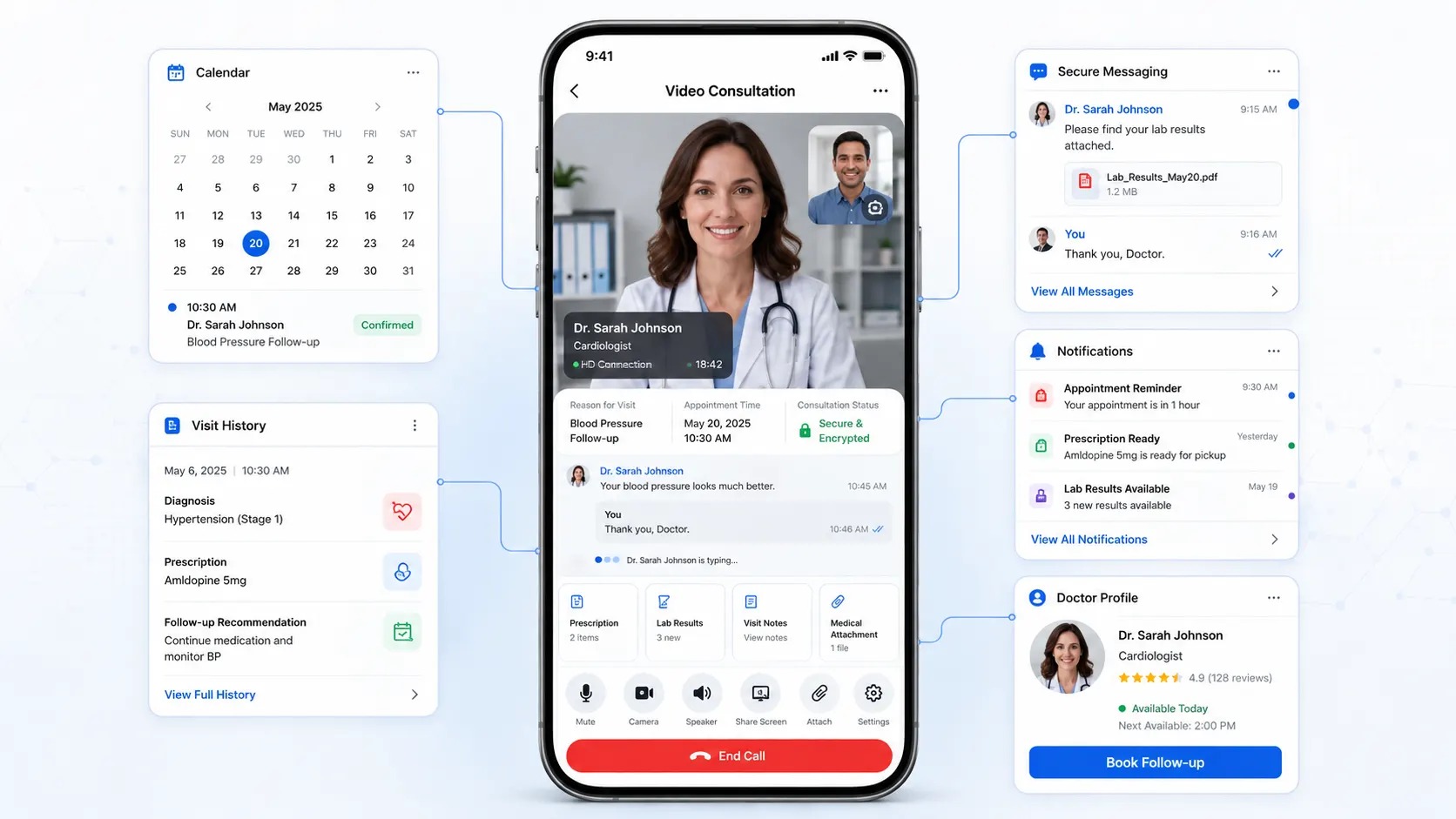
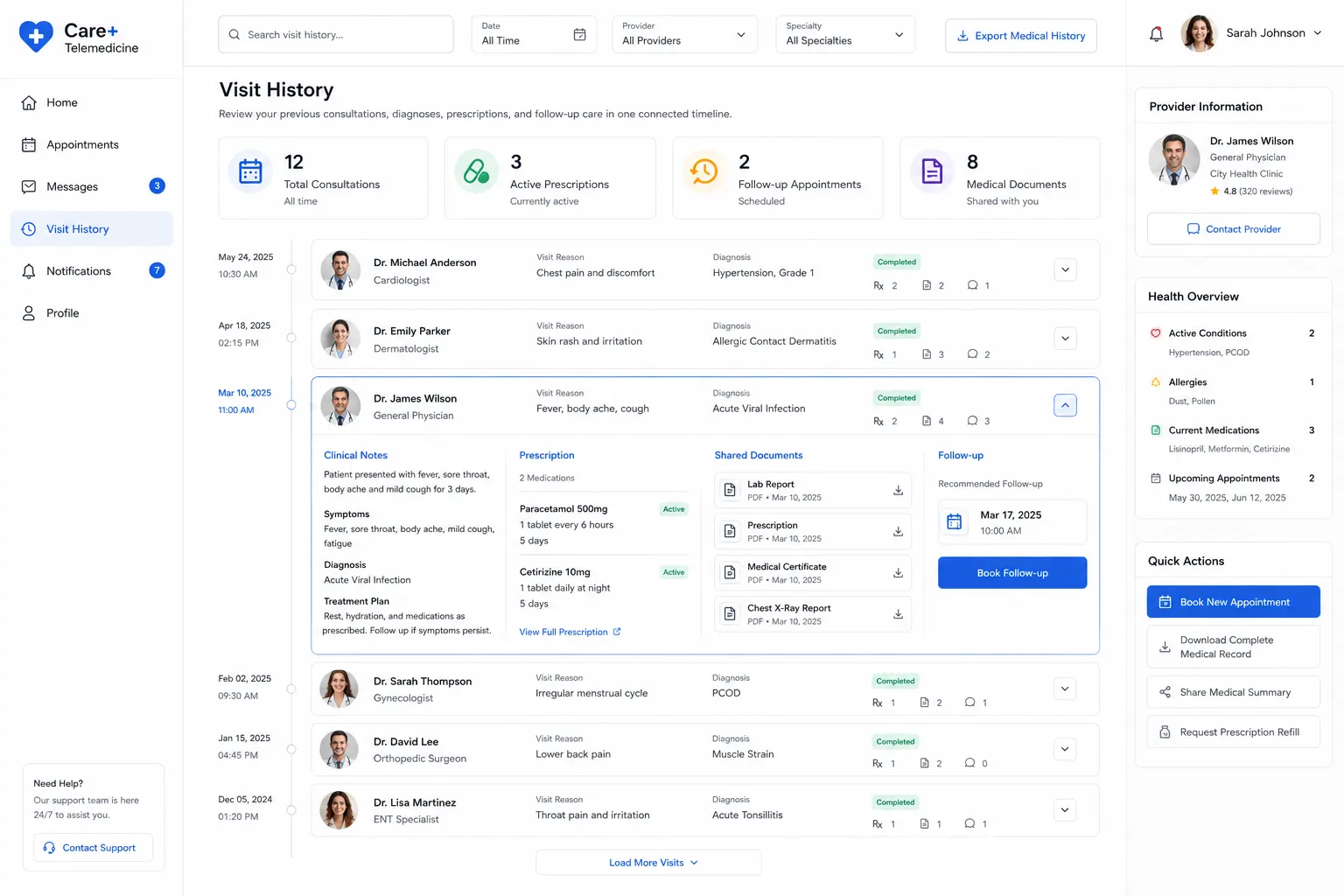
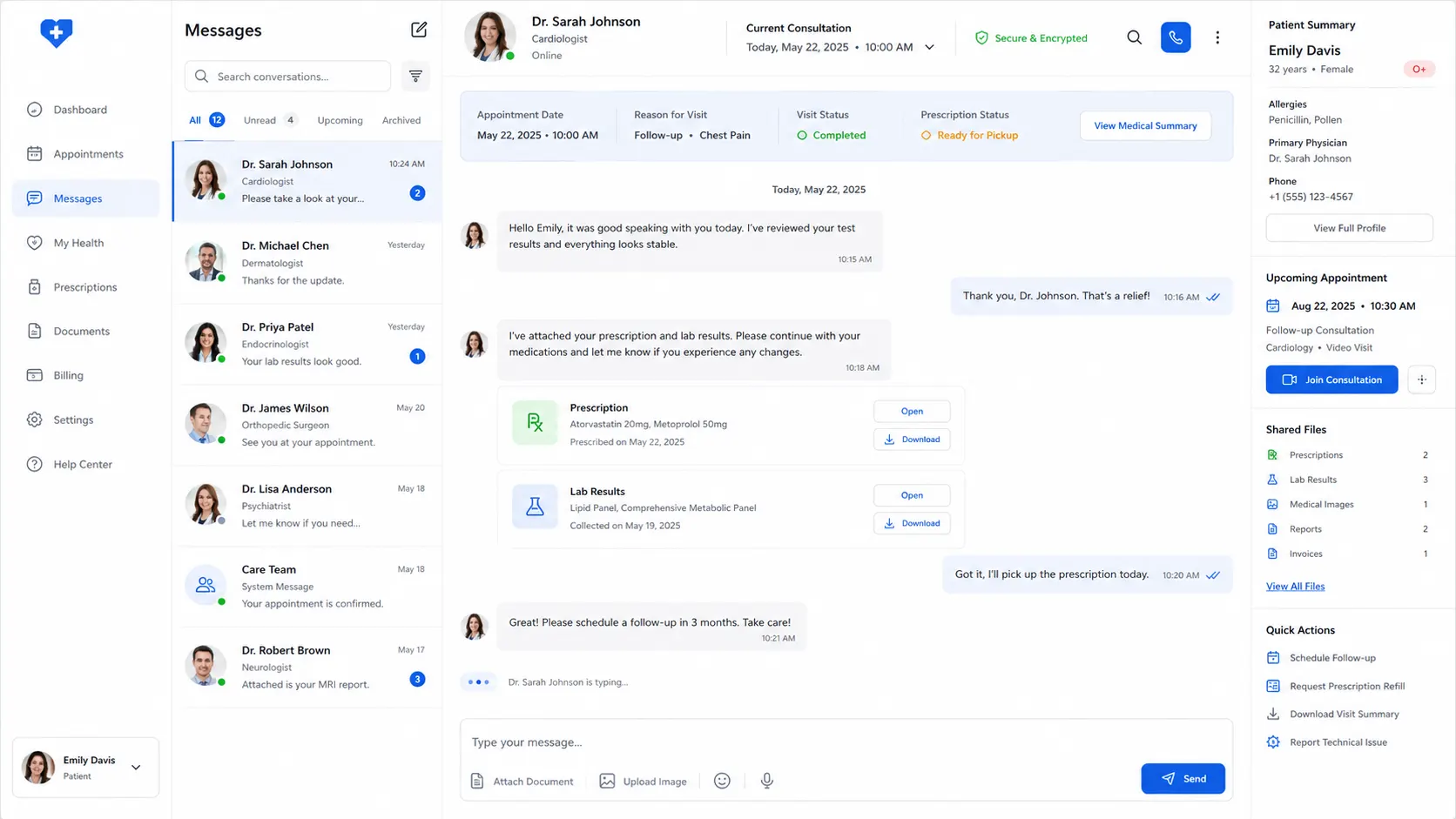
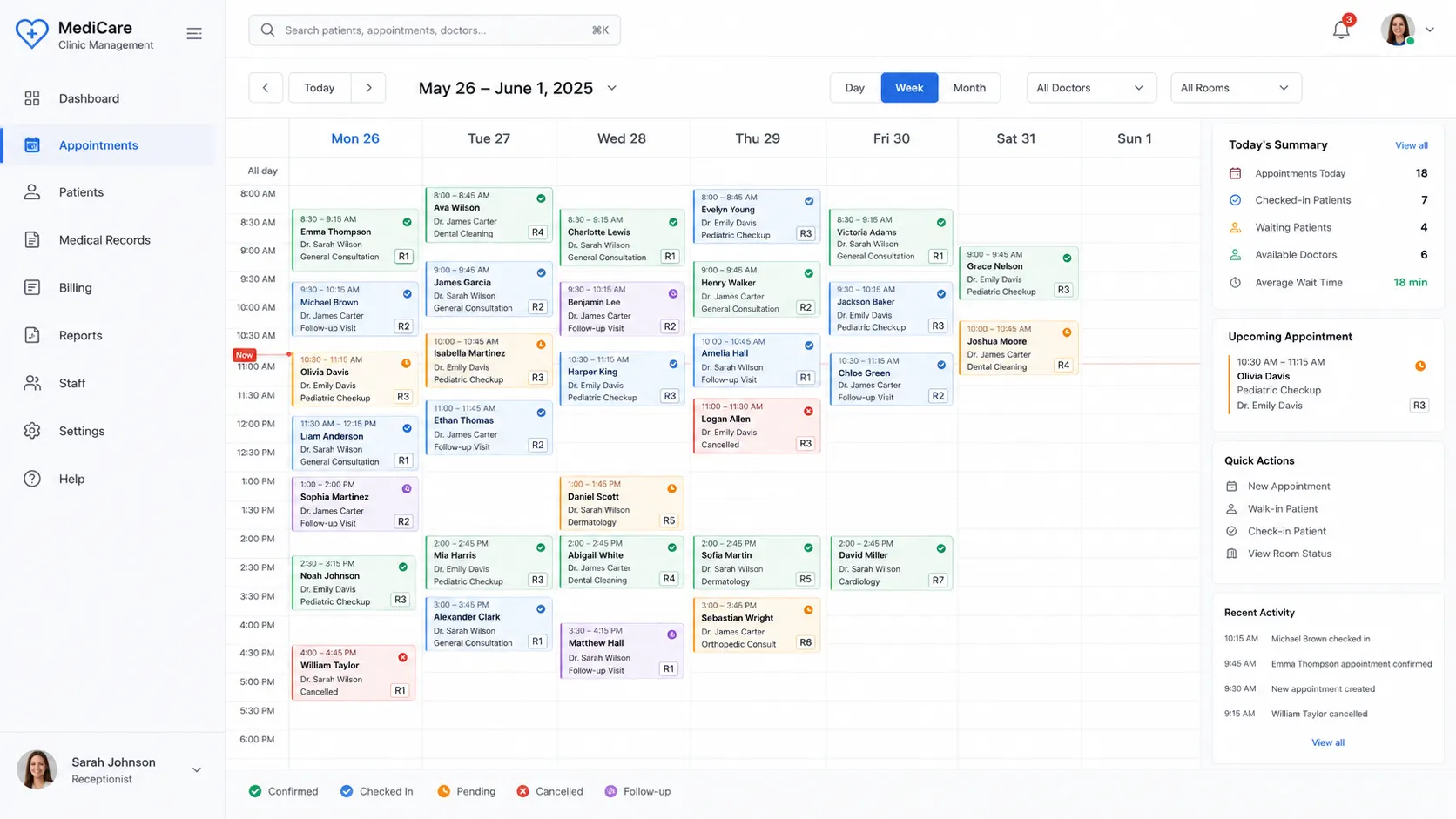
A platform that connects patients and providers for remote care, bringing consultation scheduling, secure messaging, and visit history into one accessible interface. It is built mobile-first, since a large share of remote-care sessions begin on a phone, and it treats communication and record-keeping as parts of the same encounter rather than separate tools.
Remote care only works when scheduling, communication, and record-keeping stay coordinated and secure, yet these are often bolted together from generic video and messaging tools. Patients end up juggling links and apps, providers lose the thread of a conversation between visits, and sensitive exchanges happen in places never designed to hold health information. The friction discourages exactly the patients remote care is meant to reach.
Analysis of the remote-care workflow highlighted two drop-off points: patients abandoning a booking when availability is unclear, and conversations losing continuity between sessions. Because many patients arrive on small screens and with a range of accessibility needs, the interface was designed mobile-first and to WCAG guidance from the outset, and messaging was modeled as a persistent thread per encounter so context survives between visits.
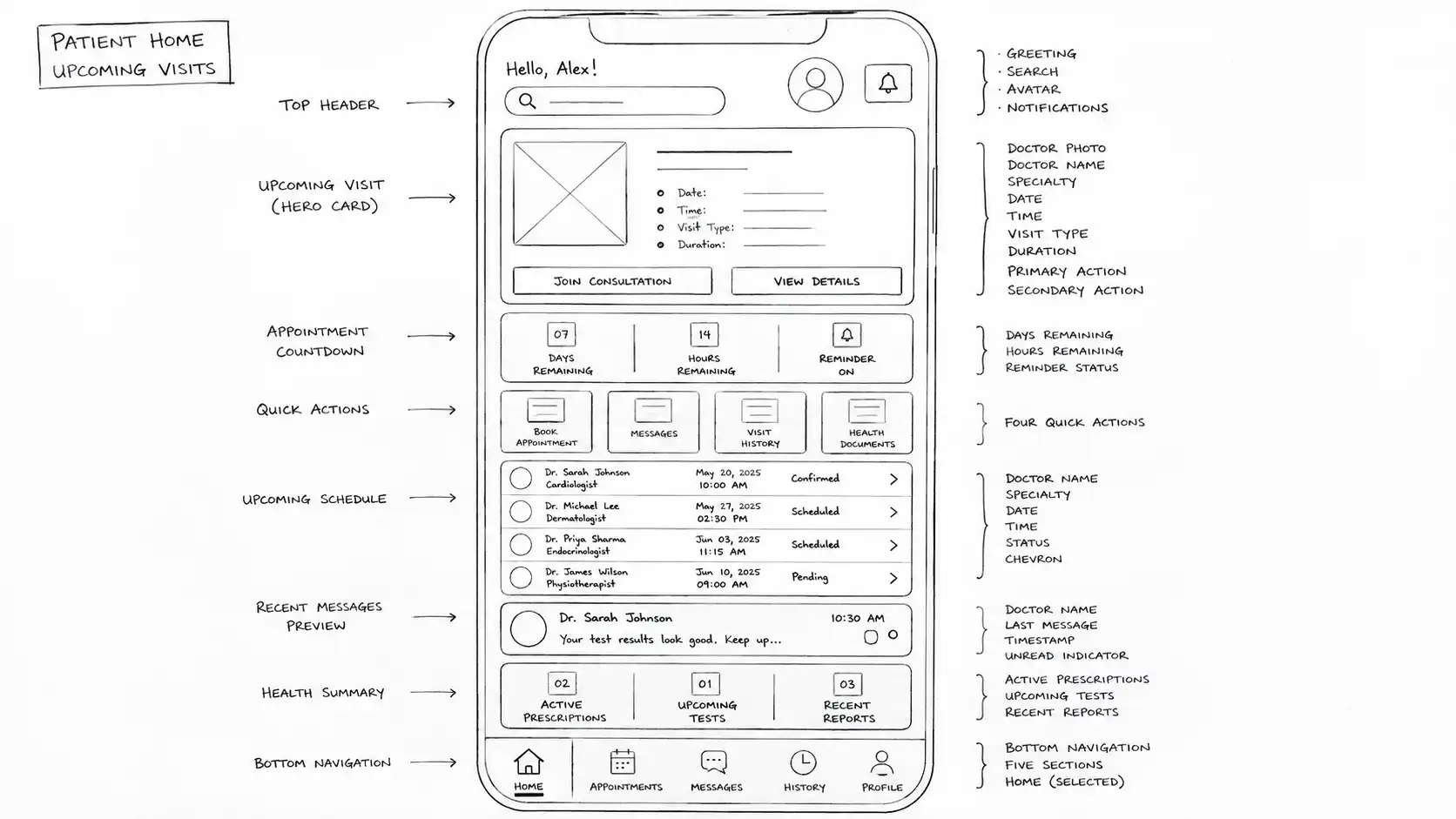
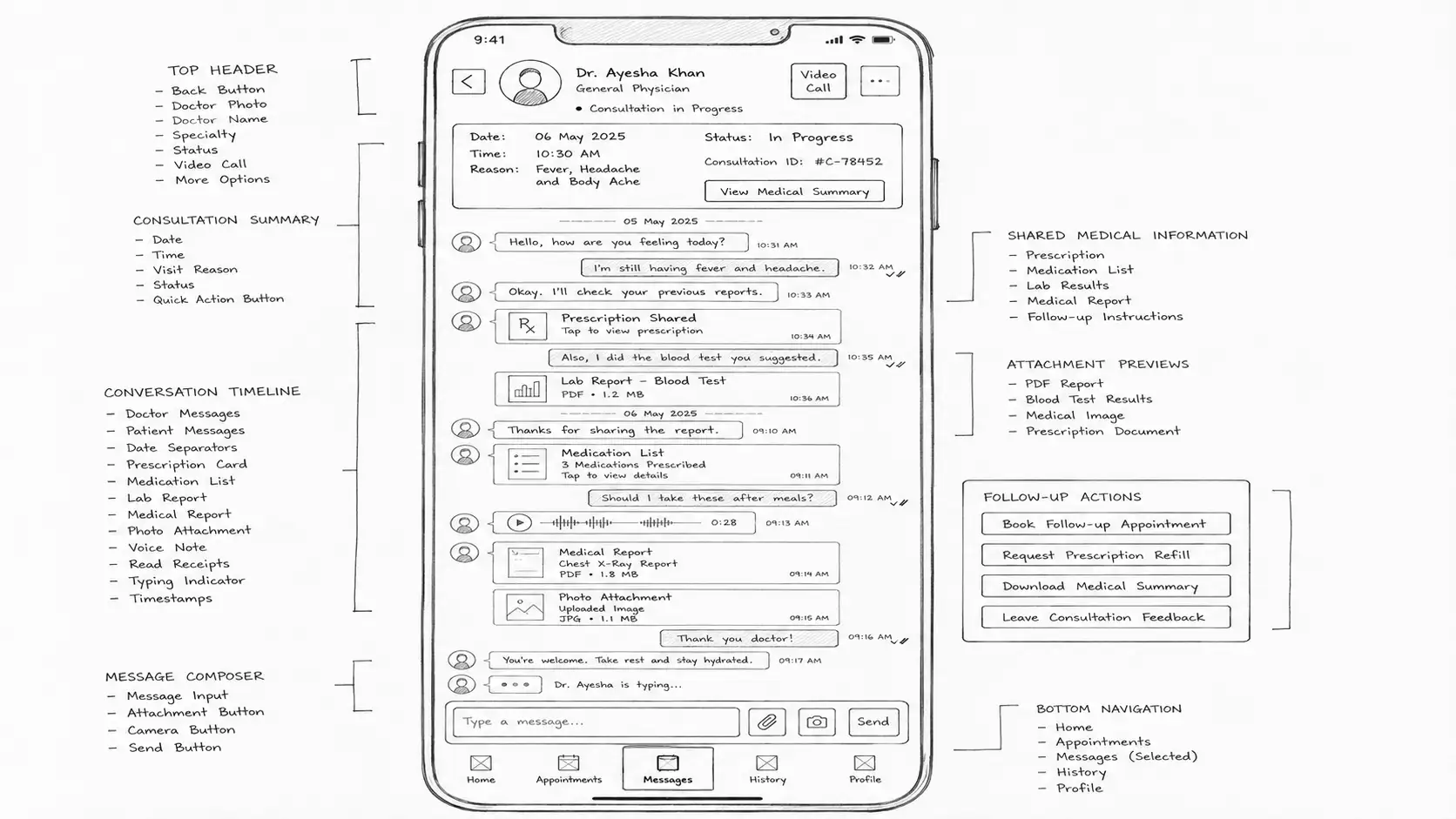
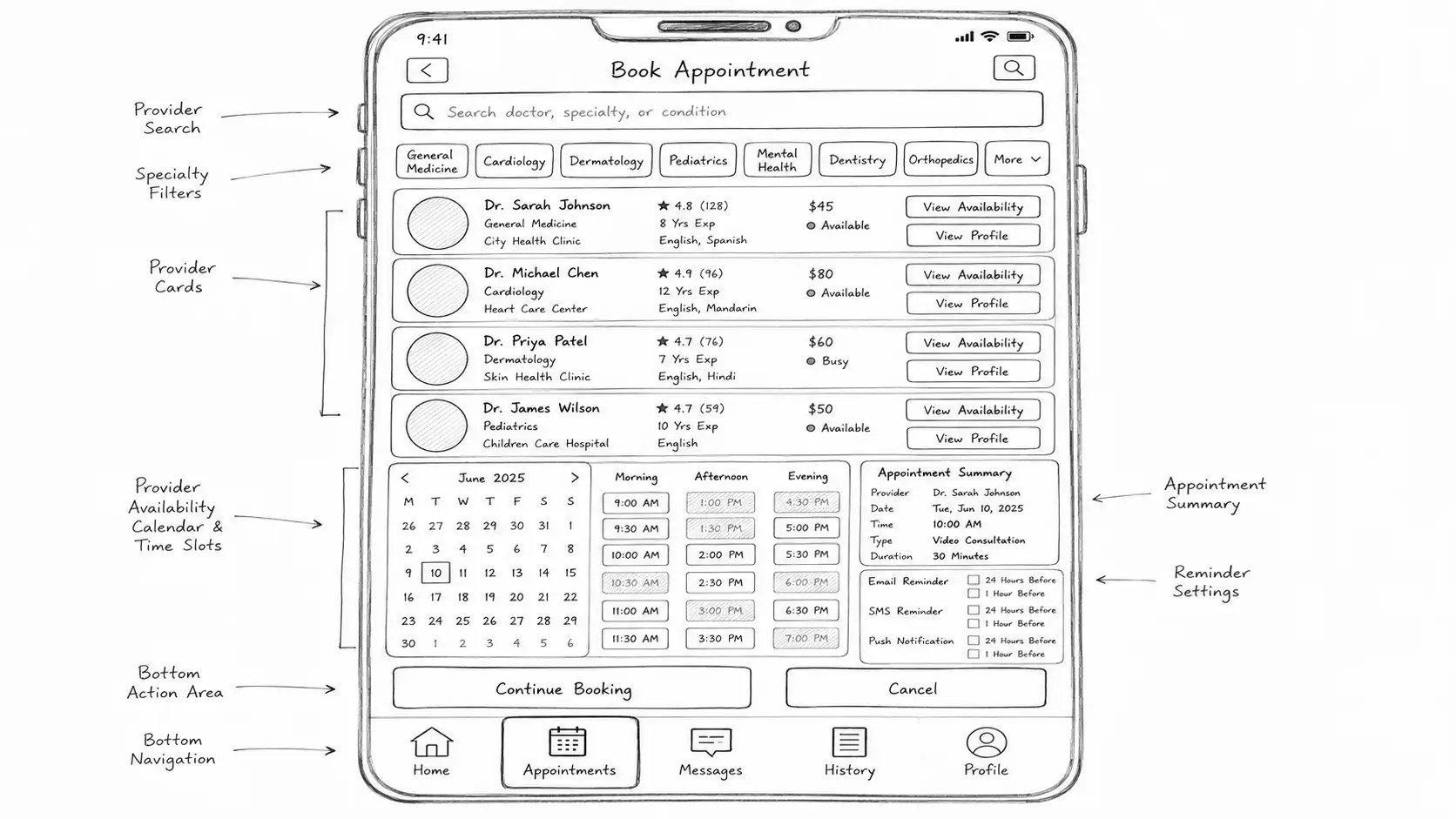
A document model in MongoDB suits the flexible, evolving shape of consultations and message threads. Core collections are Users (with a patient/provider discriminator), Availability, Consultations, and Messages. A Consultation references a patient and a provider and embeds its scheduling details; Messages reference their parent Consultation so a thread is retrieved as a single query. Provider Availability is stored as bookable windows that the booking flow reads and marks as reserved, keeping slot state consistent.
A REST API over resources such as /api/consultations, /api/availability, /api/messages, and /api/users, with booking exposed as an explicit action that reserves a slot atomically. Message retrieval is paginated per consultation thread. Authentication is JWT-based with refresh tokens; authorization ensures a patient can only read their own consultations and messages, and a provider only those they are party to.
A Next.js frontend composed of shared, accessible UI primitives, with route segments for booking, the consultation thread, and history. Client components drive real-time-feeling messaging and the booking calendar, while server components render history and availability. Responsive layout utilities and a consistent design-system layer keep the experience coherent from phone to desktop.
A Node.js and Express.js backend over MongoDB, layered into routes, controllers, and services, with data access behind a repository layer. Booking and messaging logic live in services so slot reservation and thread creation are validated and reusable. Validation and authentication run as middleware, and consultation state changes are guarded to prevent double-booking under concurrency.
Links will be added when the project is published.
Get in touch
We'd be glad to discuss how a solution like this could fit your organization.