Loading page
Loading…
Loading…
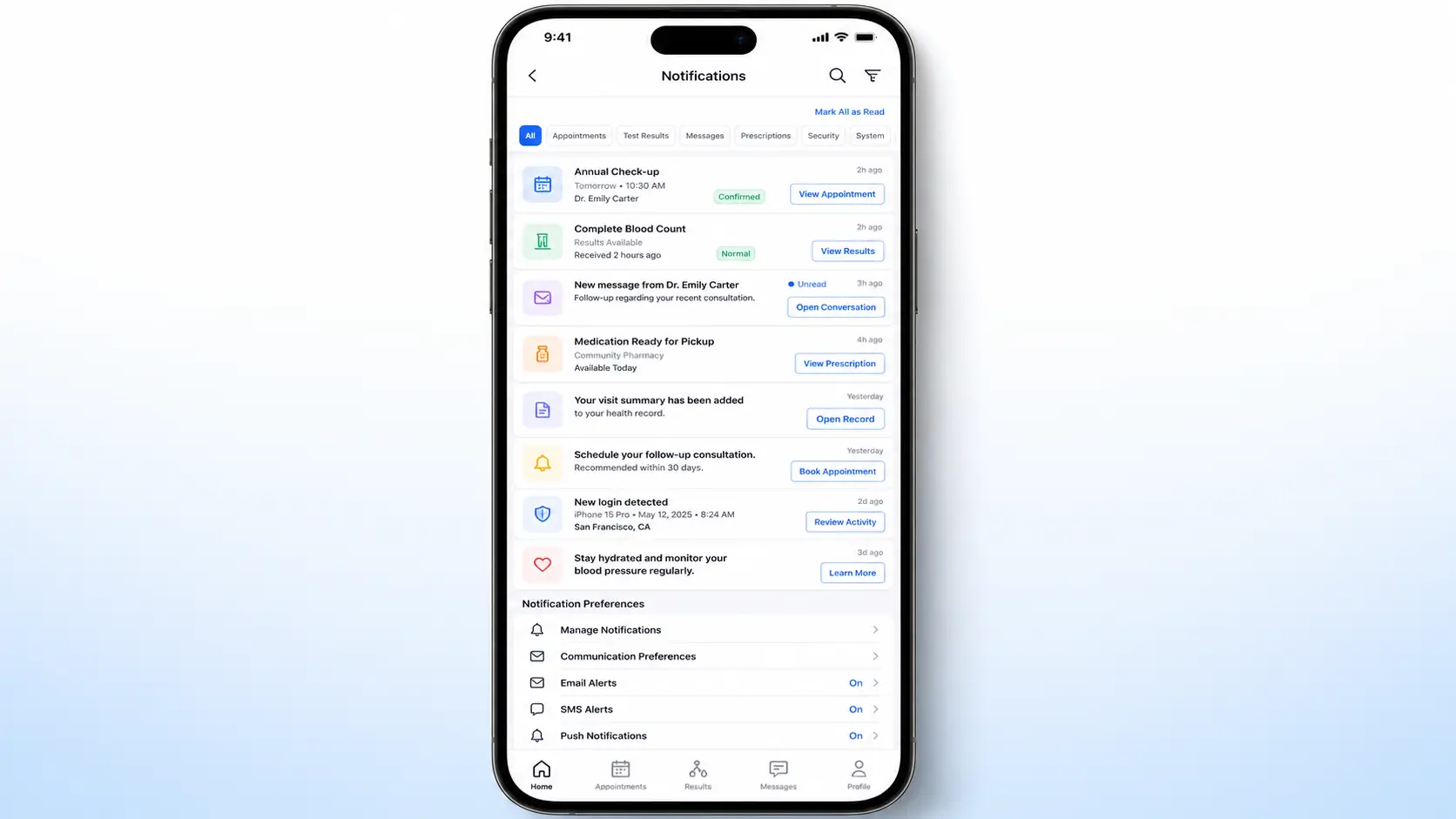
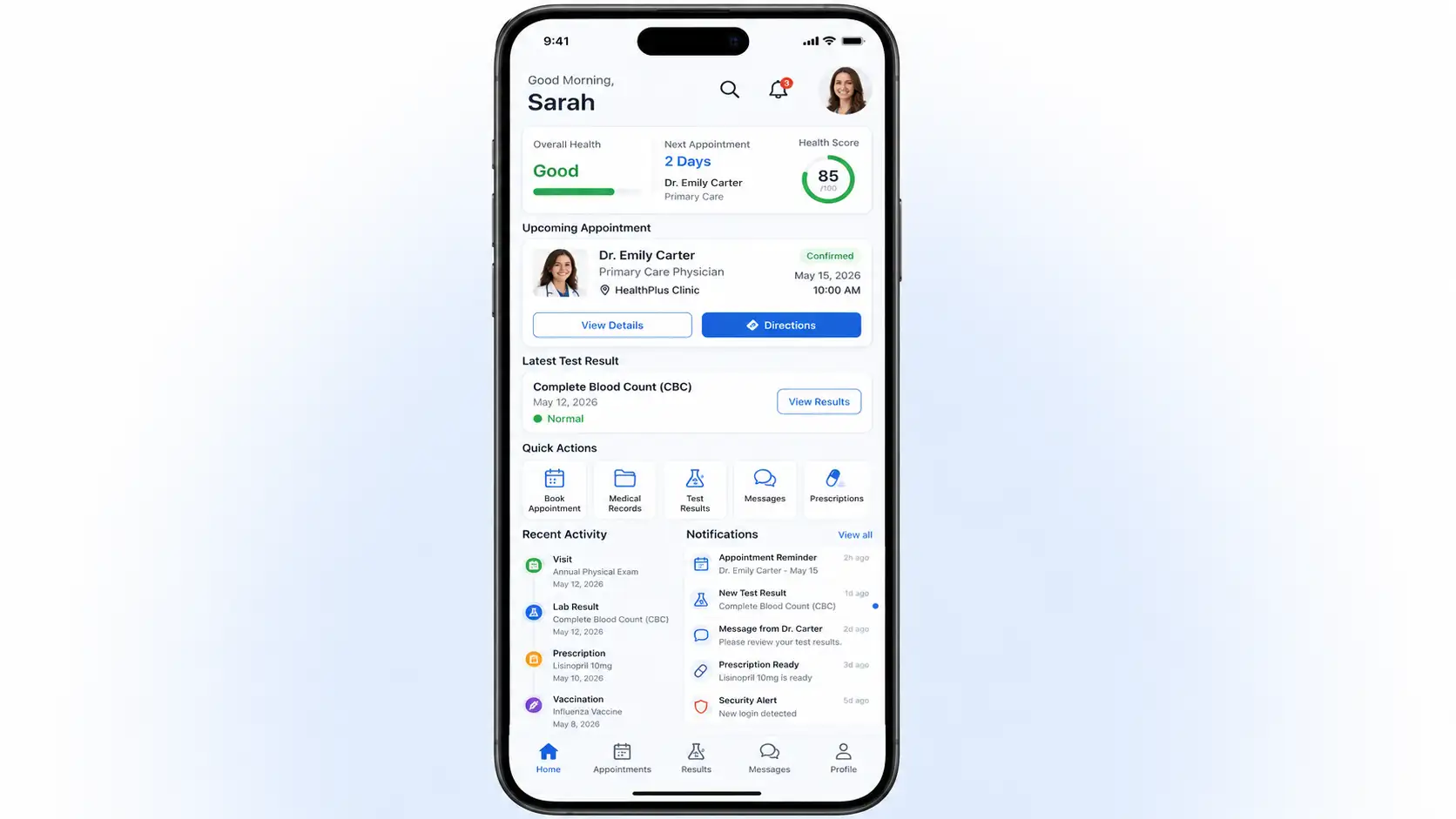
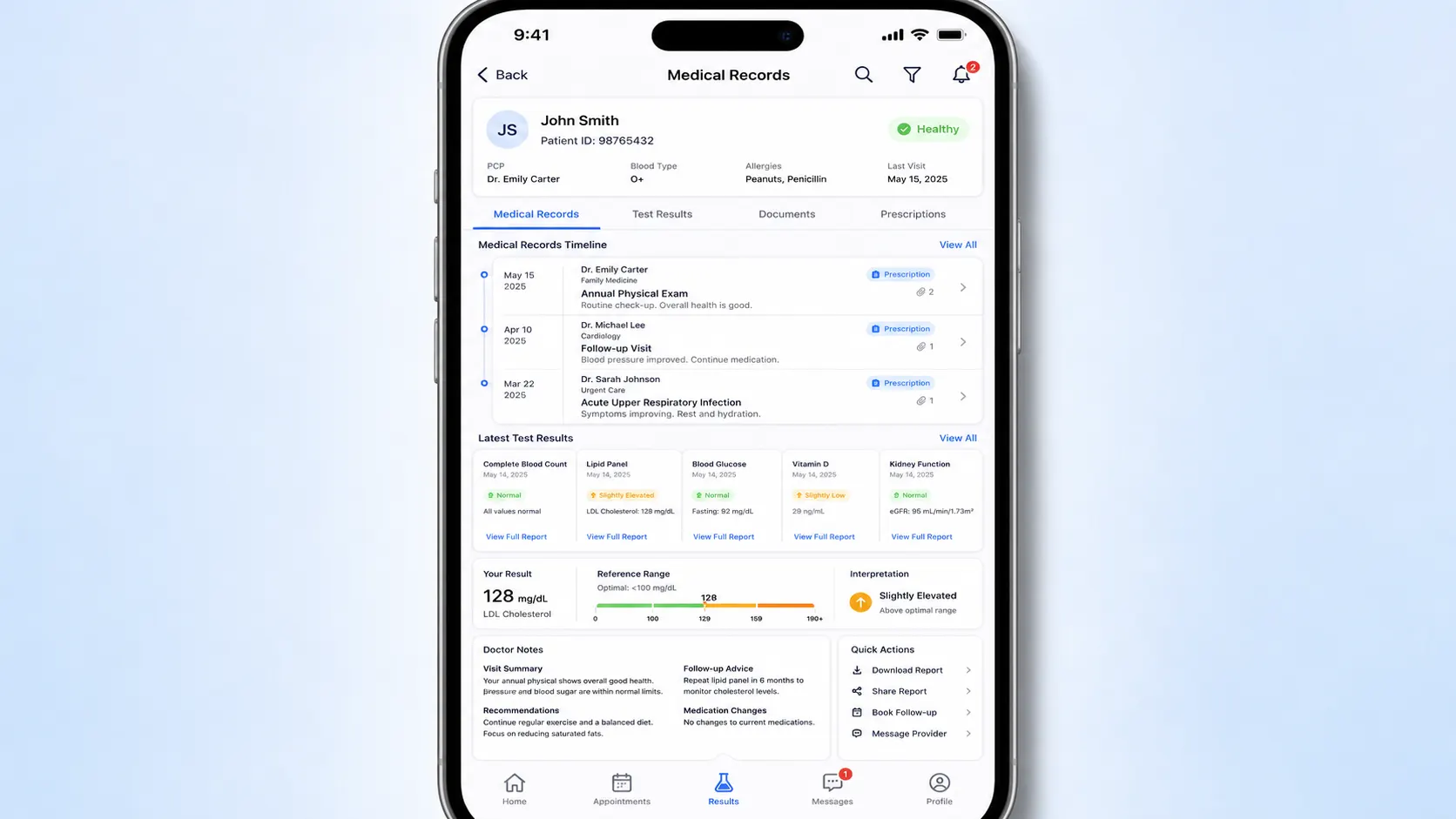
A patient-facing portal offering self-service access to appointments, records, and results, built mobile-first with accessibility as a priority.
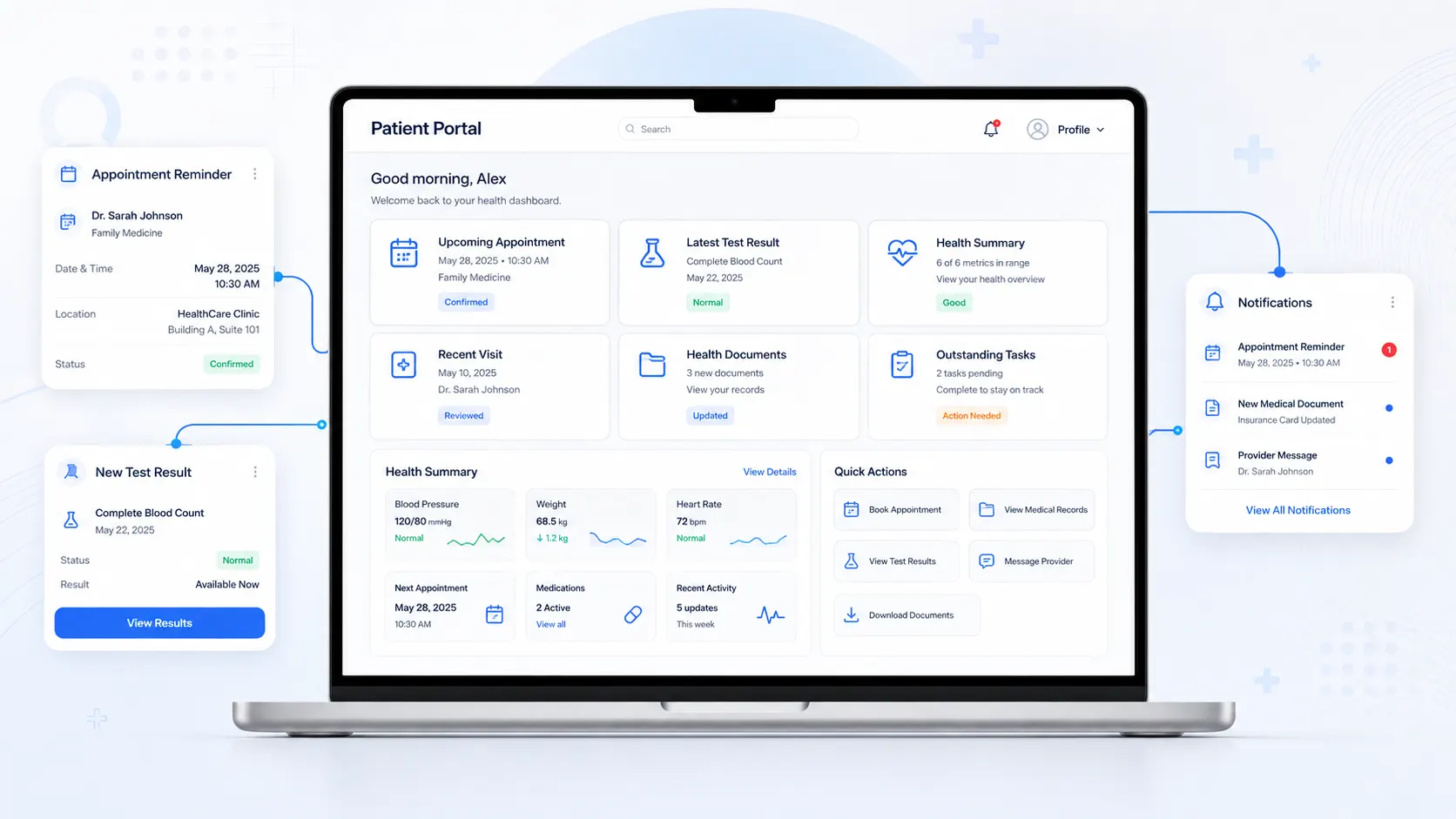
A patient-facing portal that gives people self-service access to their own appointments, records, and results through a clear, accessible interface. It is the patient's window onto the systems that hold their care information, designed so that the common questions (when is my appointment, what were my results, what do I owe) are answered without a phone call.
Patients frequently cannot see their own appointments, results, or records without contacting the practice, which generates avoidable phone traffic, delays answers, and leaves people feeling shut out of their own care. The information usually already exists in clinical systems; what is missing is a safe, patient-appropriate way to view it. Any solution also has to present sensitive data to non-technical users of every ability level.
Analysis of the questions patients most often phone in about (appointment times, results, and balances) showed the portal's value lies in answering a small set of high-frequency needs exceptionally well rather than exposing everything. Because users span every age and ability and often arrive on a phone, the interface was designed mobile-first and to WCAG guidance, with particular care given to presenting clinical results in plain, contextualized language.
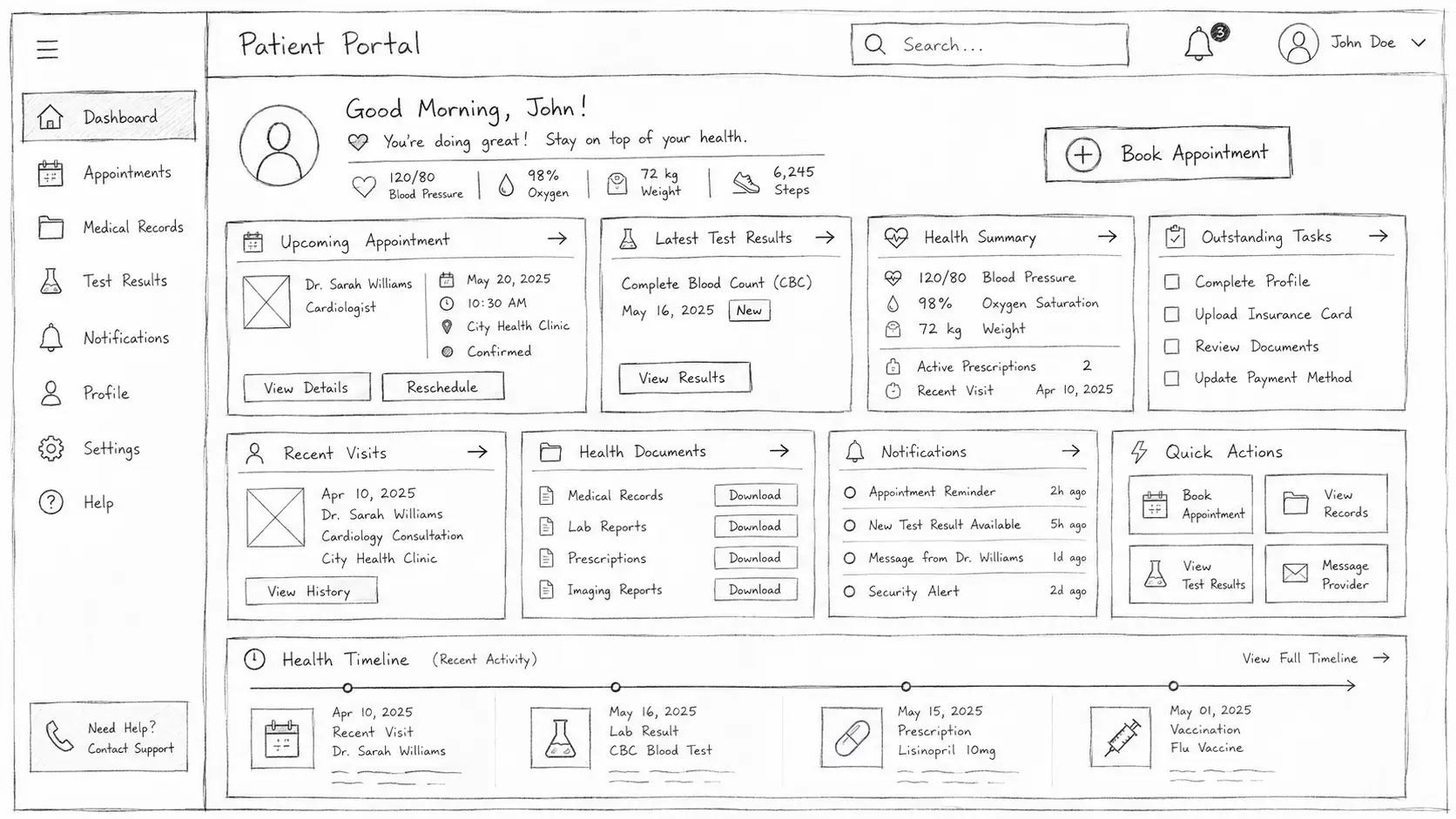
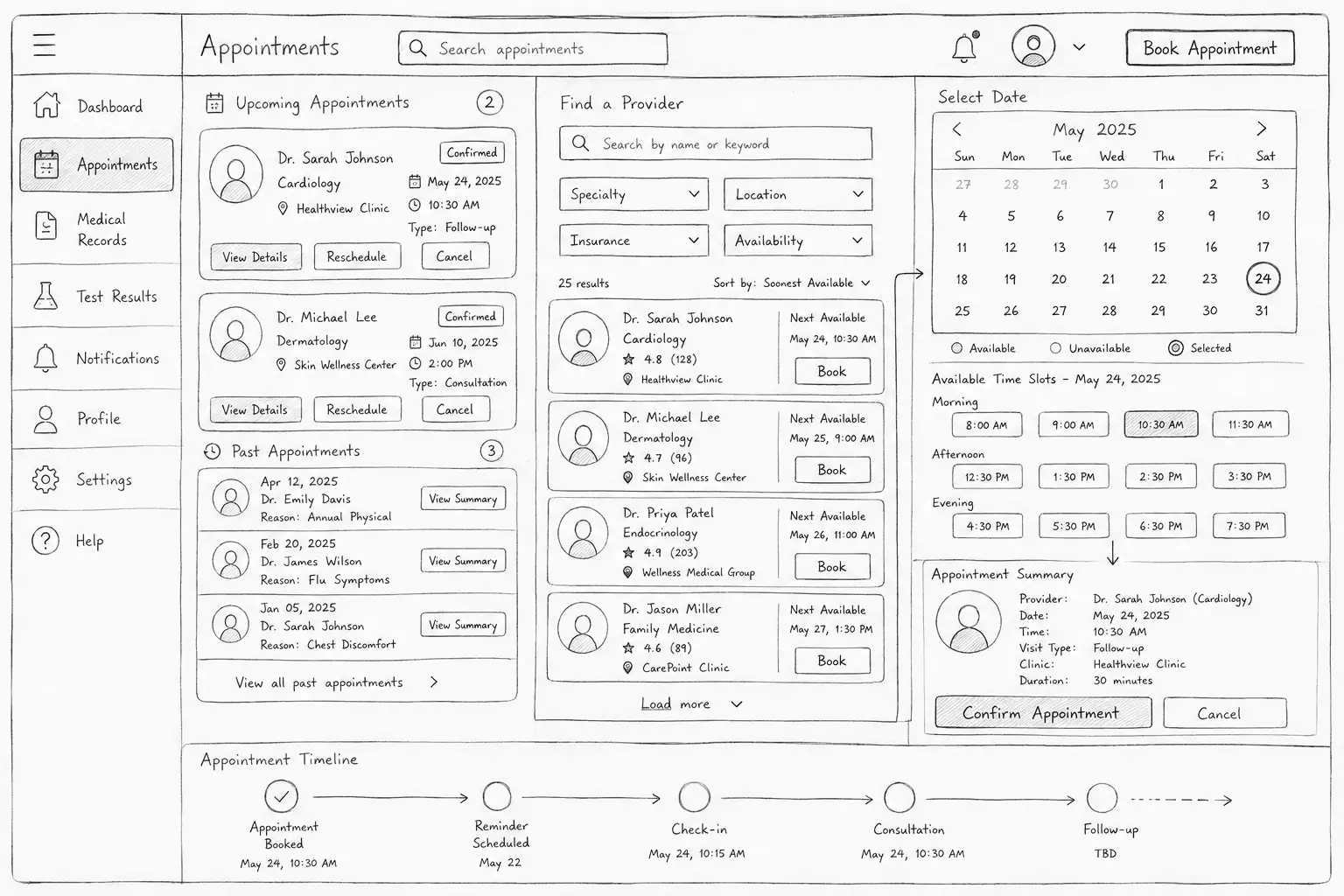
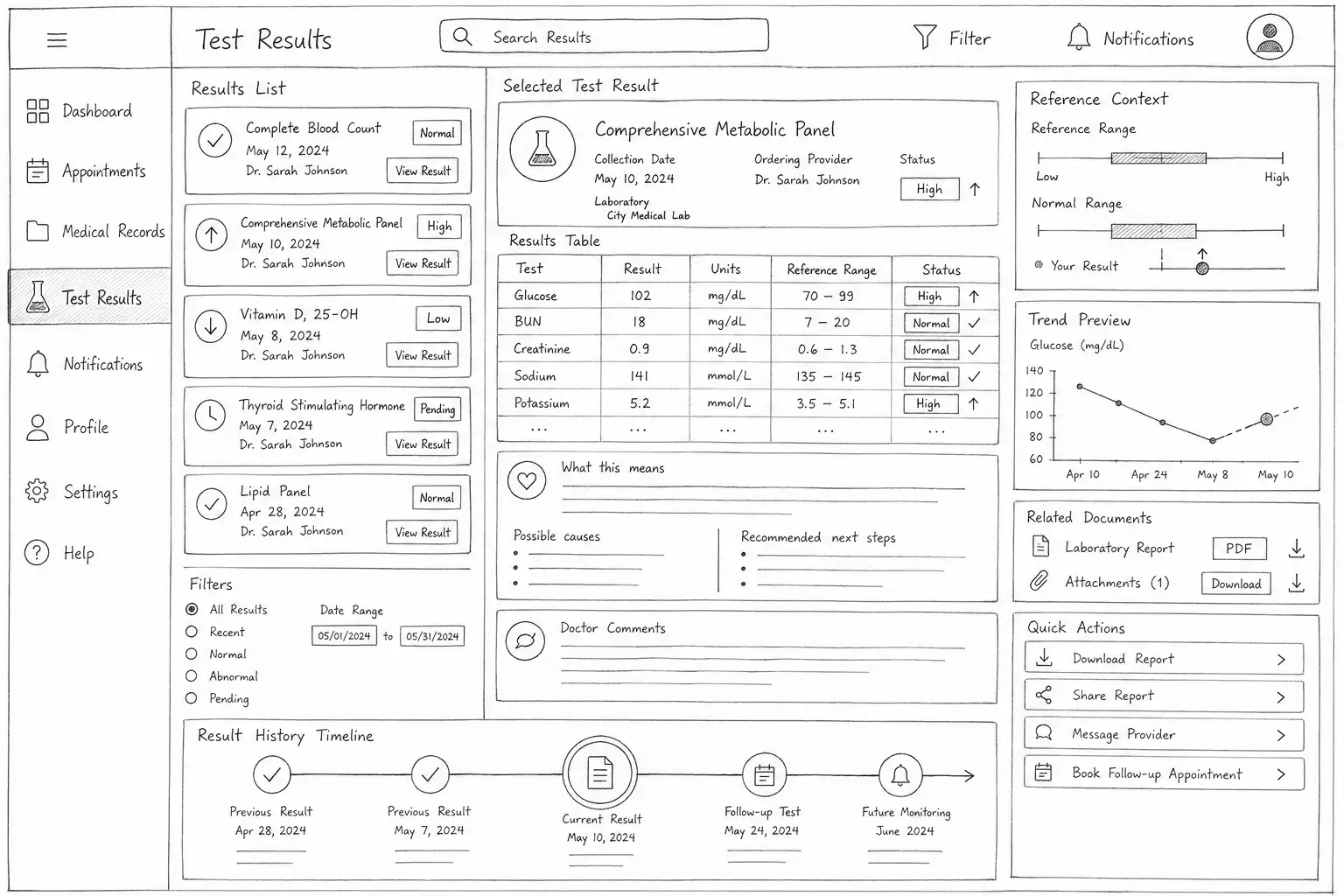
The portal itself owns a lean data model (Account, PatientProfile, and Notification) while treating clinical data as belonging to the systems of record it reads through the API. An Account authenticates a user and links to exactly one PatientProfile, which holds portal-specific preferences and the identity binding used to authorize record access. Notifications reference an Account and the event that triggered them. Appointments, records, and results are represented as references resolved against the backing services rather than duplicated locally.
The portal consumes a REST API exposing patient-scoped resources such as /api/me/appointments, /api/me/records, and /api/me/results, where the /me convention guarantees a patient can only ever address their own data. Authentication uses JWT access tokens with refresh rotation; every request is authorized against the authenticated patient's identity, and booking is a guarded POST that validates availability before writing back.
A Next.js and React frontend built entirely from reusable, accessible components (cards, lists, result panels, dialogs) with route segments for the dashboard, appointments, records, and results. Server components render the patient's data securely, keeping tokens off the client where possible, while client components handle interactive booking and notifications. TypeScript and a shared design system keep the interface consistent and maintainable.
The supporting backend is a Node.js and Express.js API over PostgreSQL that authenticates patients, stores portal-specific data, and mediates access to clinical systems of record. It is layered into routes, controllers, and services, with an authorization layer that resolves the authenticated patient and scopes every downstream read to their identity, so the portal can present clinical data without ever broadening a patient's reach beyond their own record.
Links will be added when the project is published.
Get in touch
We'd be glad to discuss how a solution like this could fit your organization.