Loading page
Loading…
Loading…
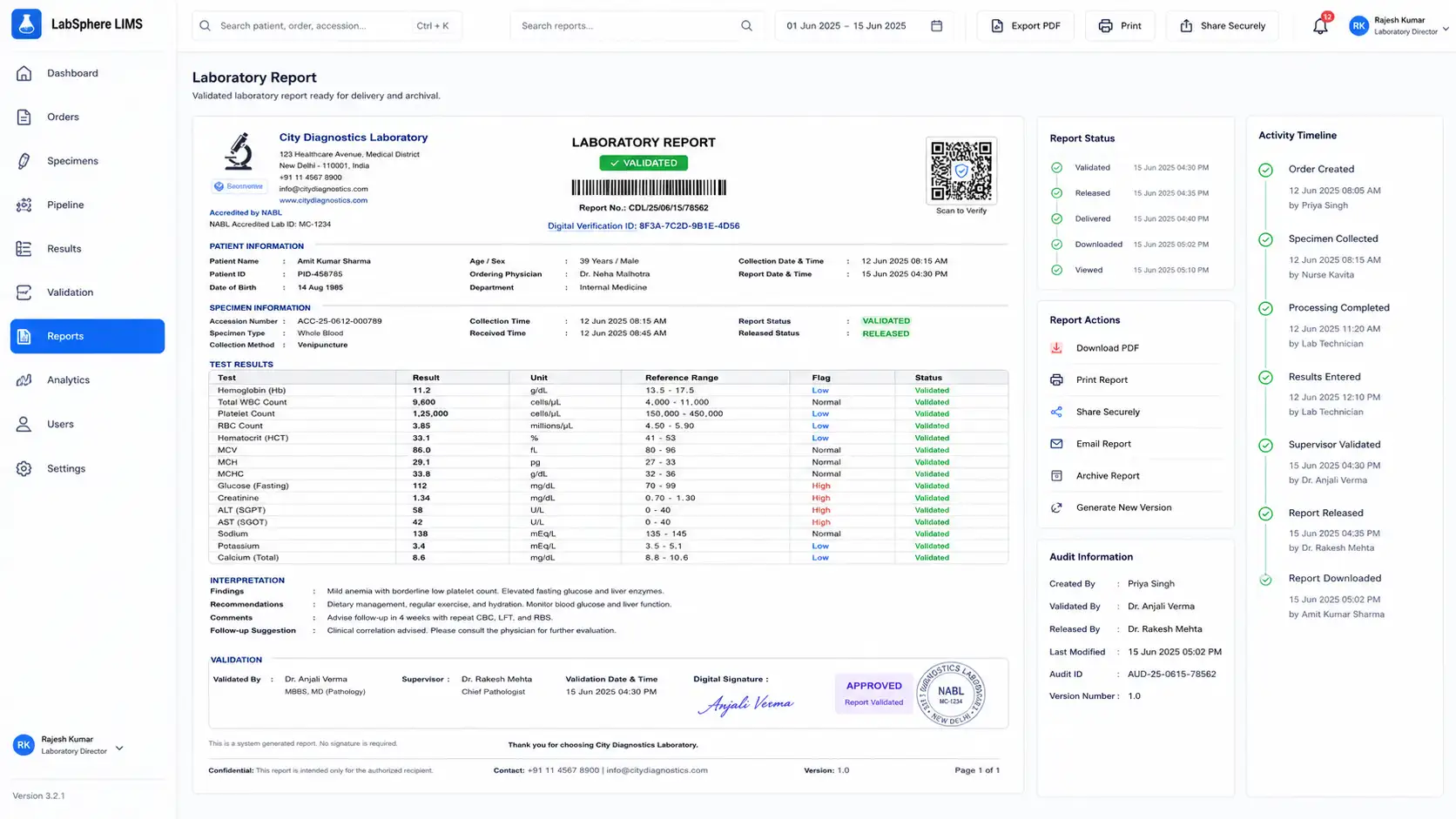
A laboratory management system covering the full path from test order and specimen tracking to result entry and report delivery.
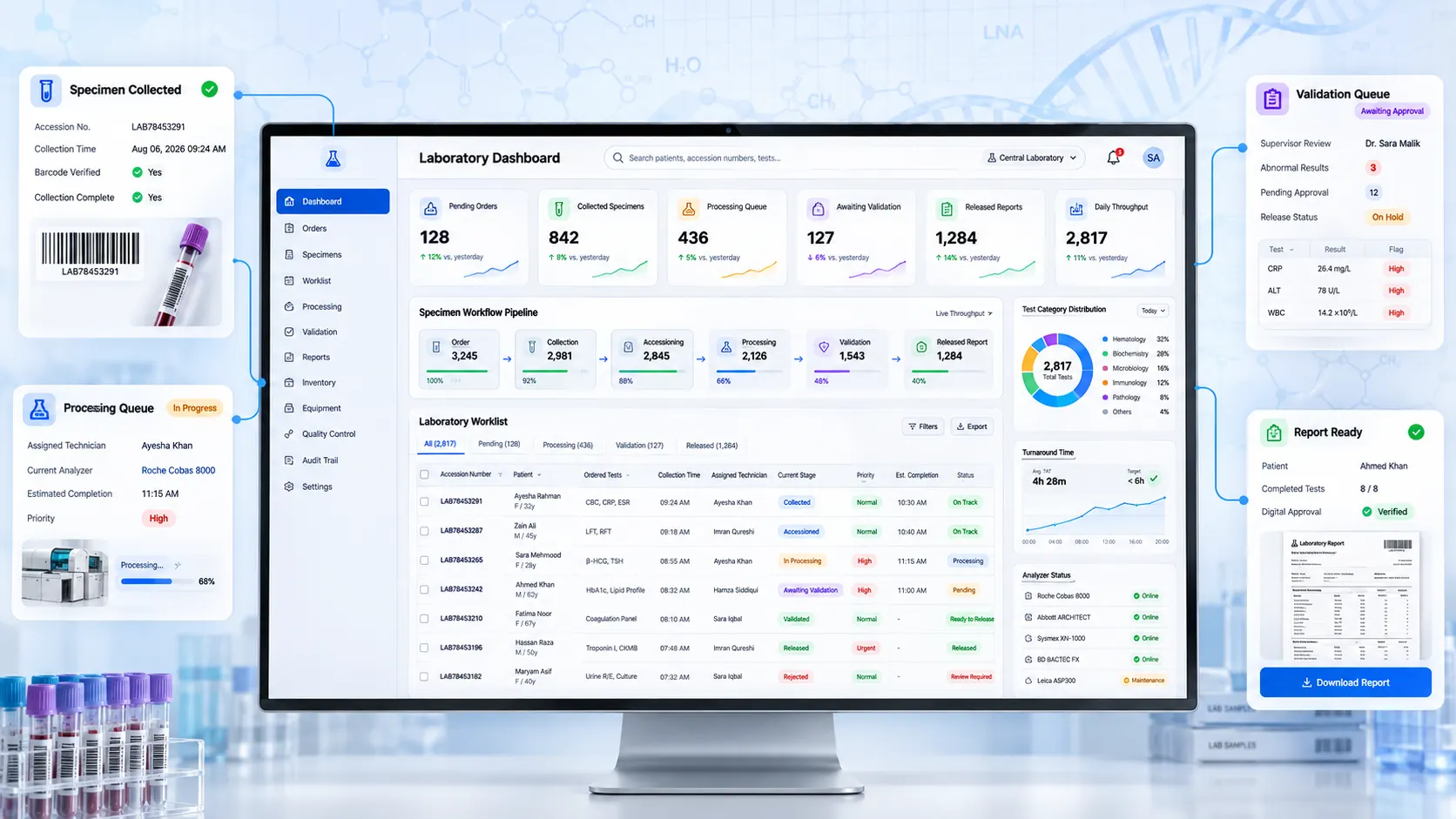
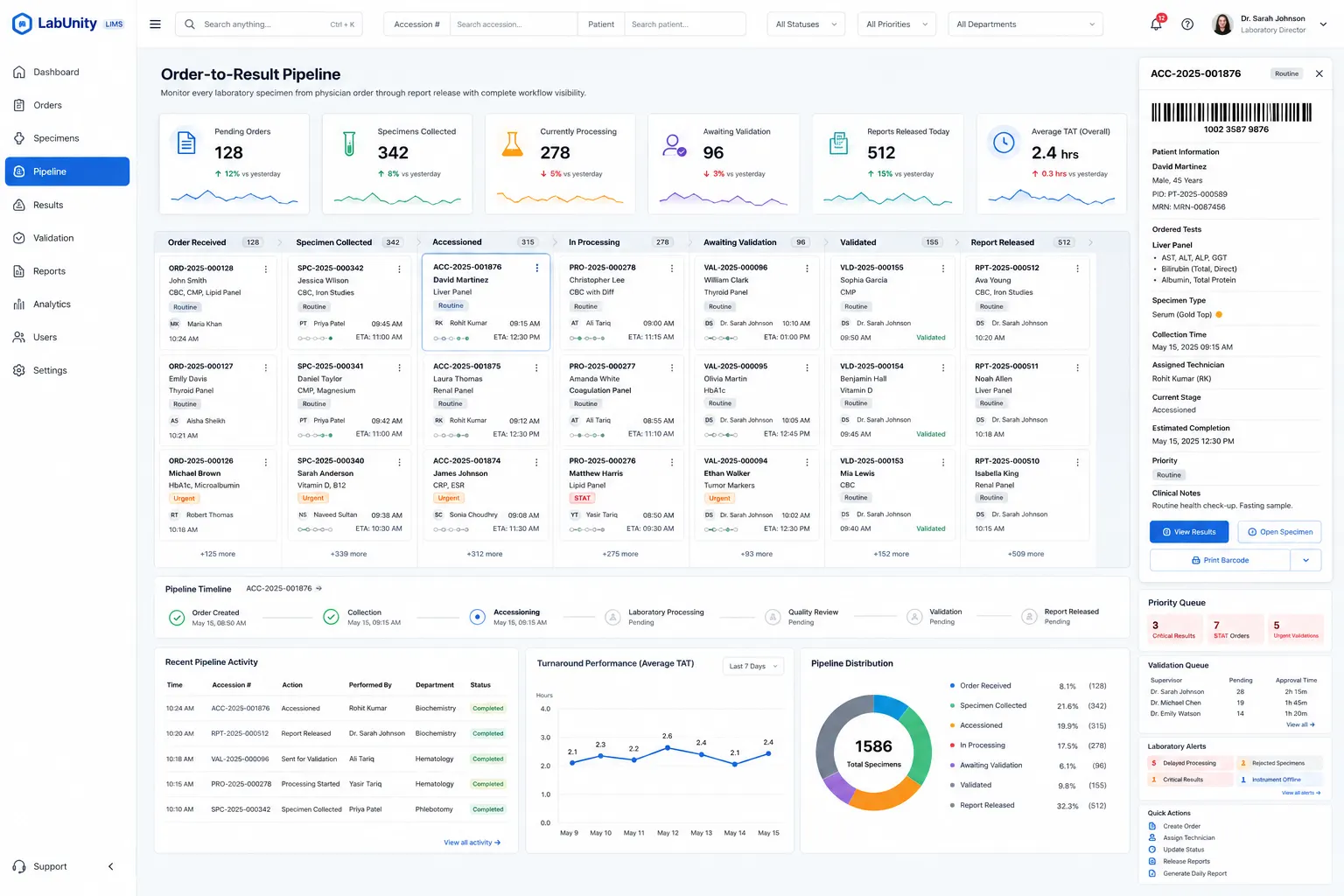
A system that manages the laboratory workflow end to end, from test ordering and specimen collection through result entry, validation, and report delivery. Each specimen carries a unique identity from the moment it is collected, so its position in the pipeline is always known and results are bound to the correct patient and order.
A lab processes many orders and specimens at once, and manual tracking makes mix-ups, delays, and transcription errors almost inevitable. The most dangerous failure is a specimen or result attached to the wrong patient; the most common is simply not knowing where a sample is in the pipeline. Both stem from the same gap: no reliable, unbroken chain of identity from collection to report.
Analysis of the order-to-result pipeline identified specimen identity and result validation as the two points where errors are both most likely and most consequential. It also showed that technicians need to see pipeline status continuously, not on request. These insights drove accessioning at the point of collection, explicit recorded status transitions, and a mandatory validation step before results leave the lab.
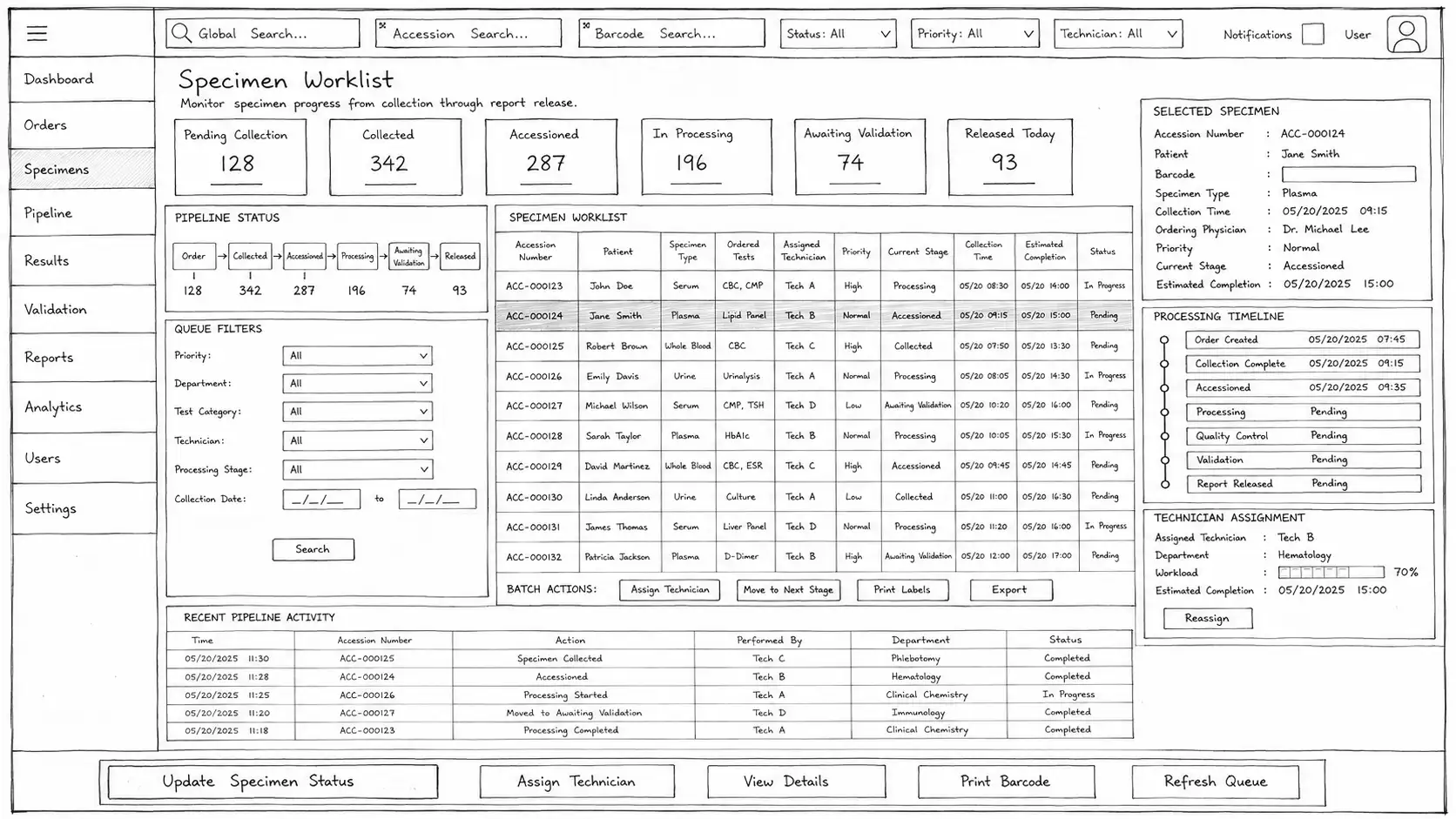
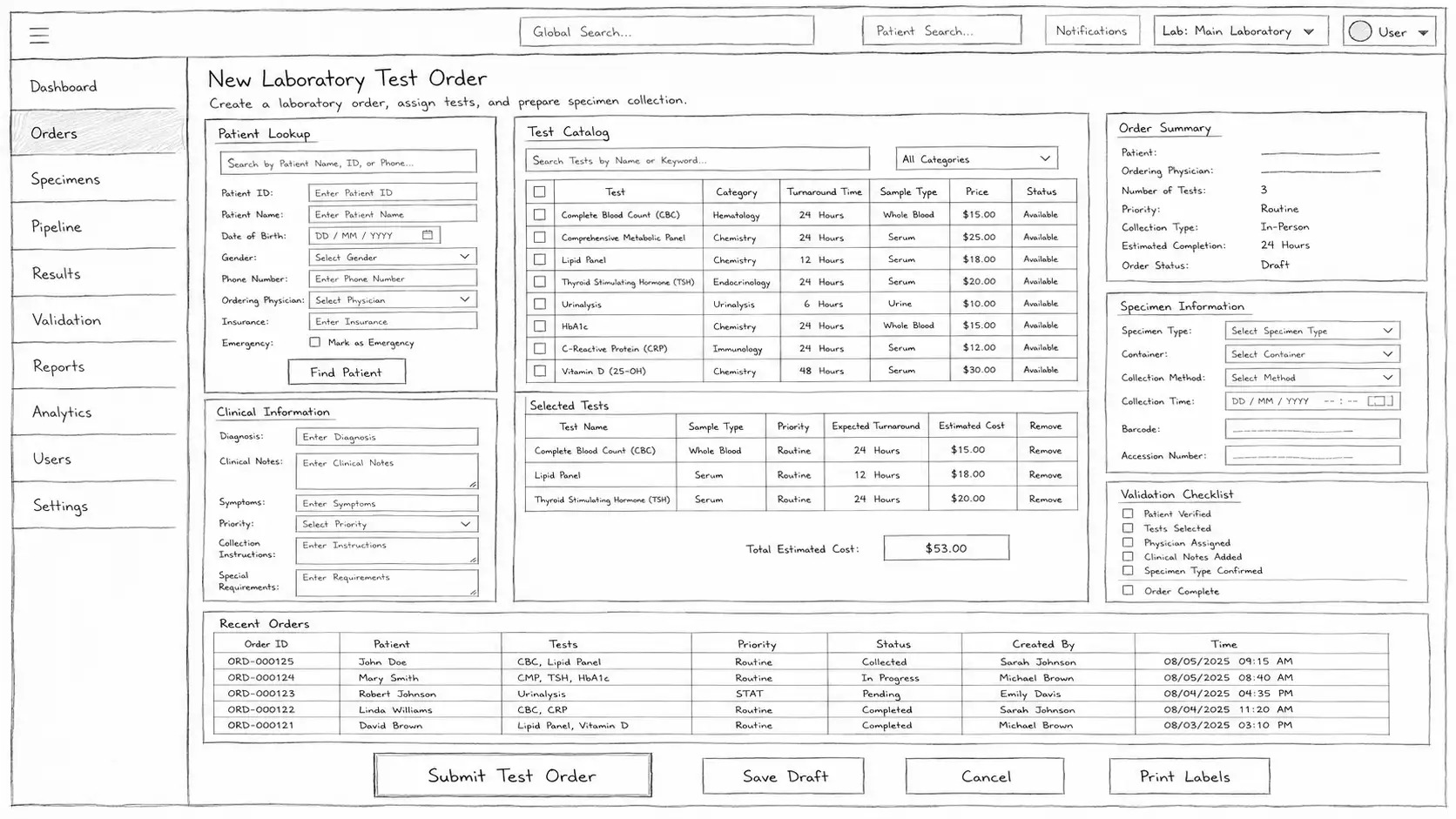
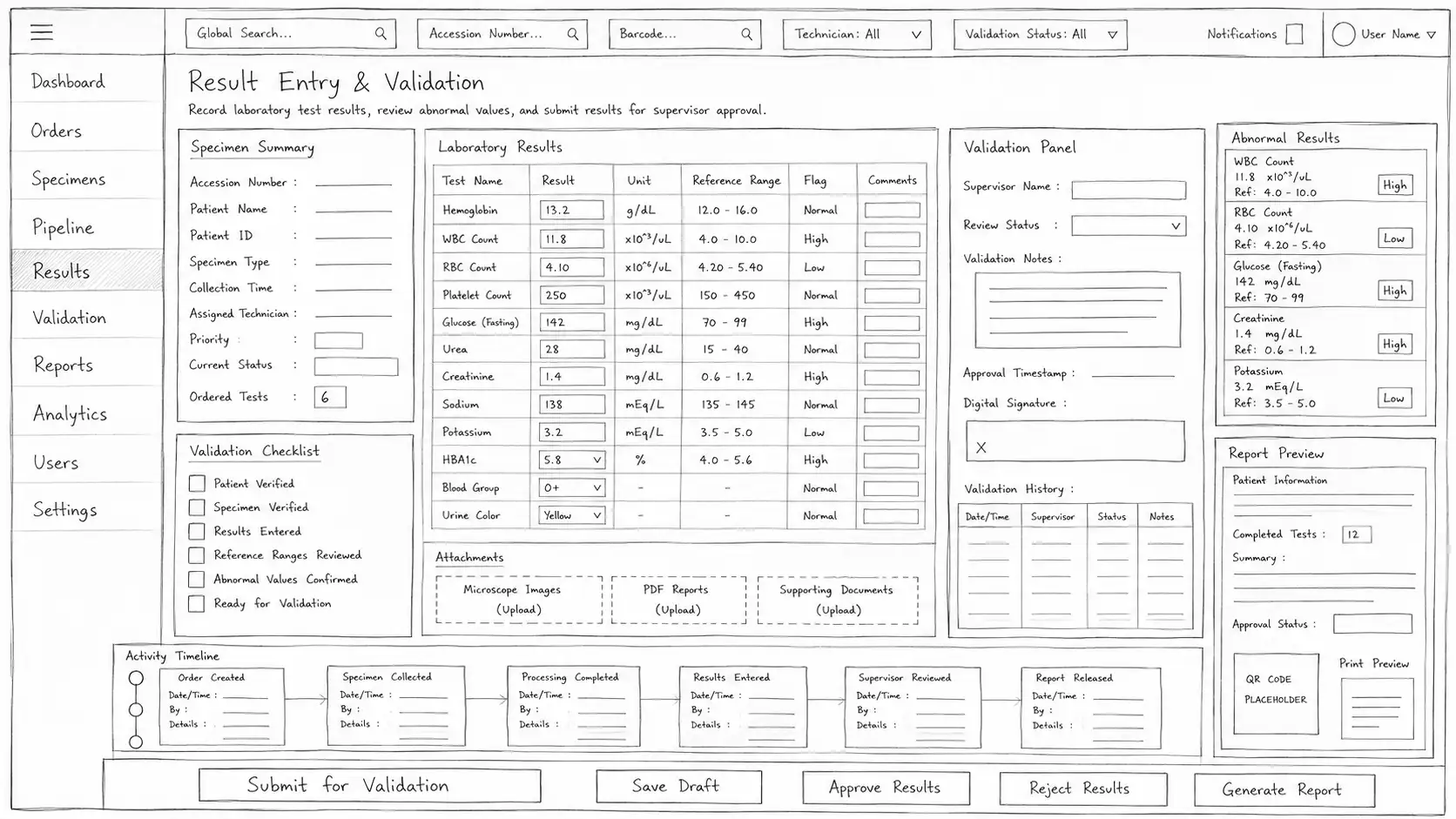
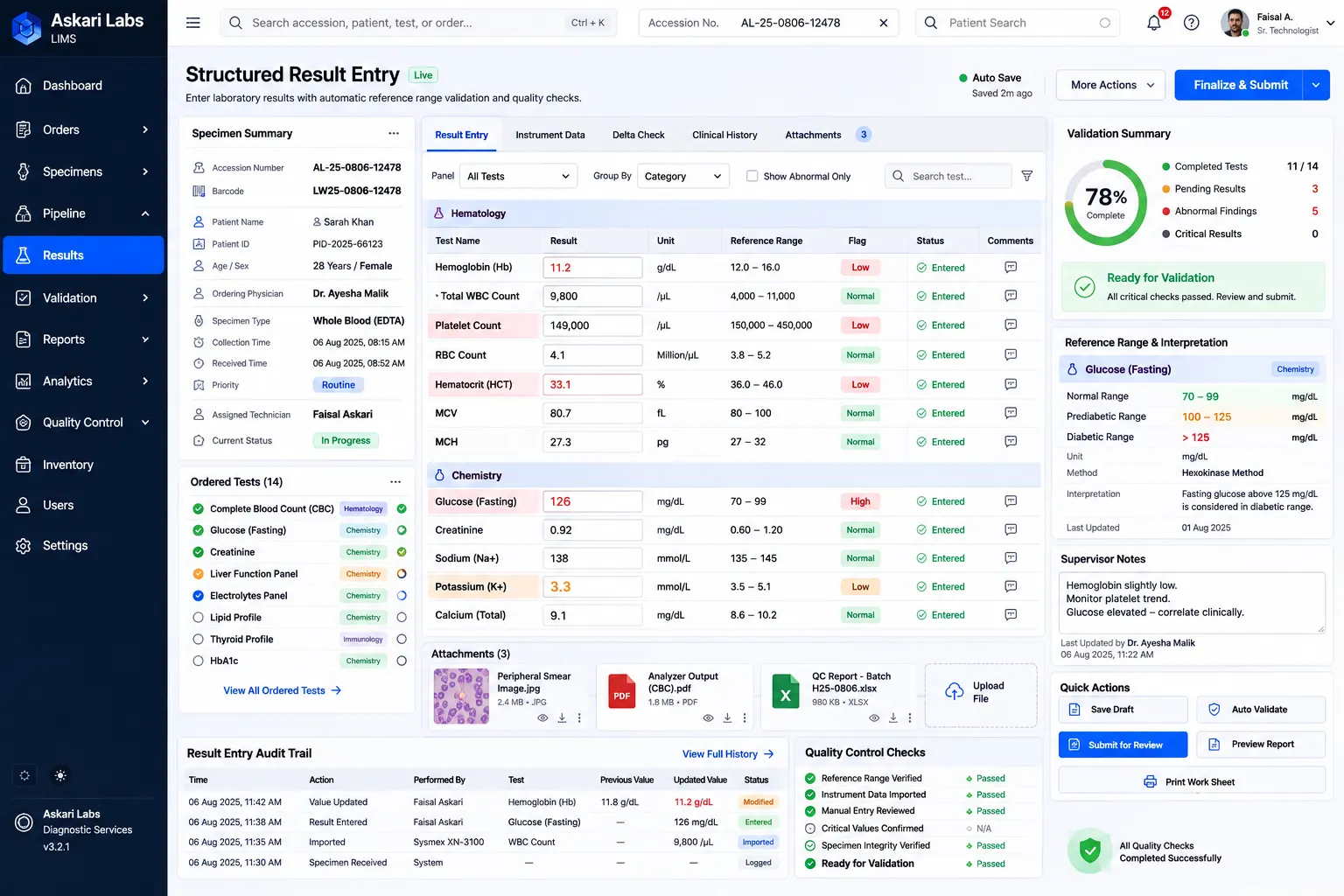
Core entities are Patient, TestOrder, TestCatalog, Specimen, Result, and User. A TestOrder references a Patient and one or more catalog tests; each ordered test yields a Specimen with a unique accession identifier and a status. Results reference their Specimen and the specific test, and carry reference ranges and a validation state. A supervisor's validation is recorded on the Result with the validating User and timestamp, preserving accountability for released values.
A REST API over /api/orders, /api/specimens, /api/results, and /api/catalog, where status changes and validation are explicit endpoints (e.g. POST /api/specimens/:id/status, POST /api/results/:id/validate) so clinical state is always transitioned deliberately. Report generation is exposed per order. Authentication is JWT-based; authorization separates ordering, result-entry, and validation permissions so only supervisors can release results.
A Next.js frontend with route segments for ordering, the specimen worklist, result entry, and validation, built from shared UI primitives. The worklist and status board are client components for responsive interaction; result entry uses structured forms with inline reference-range feedback. Server components render orders, catalog, and reports.
A Node.js and Express.js backend over PostgreSQL, organized into routes, controllers, and services. The specimen state machine and validation rules live in the service layer so transitions are centrally enforced and testable. Result entry and validation run in transactions, and report generation reads only validated results, guaranteeing that unvalidated data never reaches a provider.
Links will be added when the project is published.
Get in touch
We'd be glad to discuss how a solution like this could fit your organization.