Loading page
Loading…
Loading…
A management system for outpatient clinics that unifies scheduling, patient records, and billing so front-desk and clinical staff work from one consistent source of information.
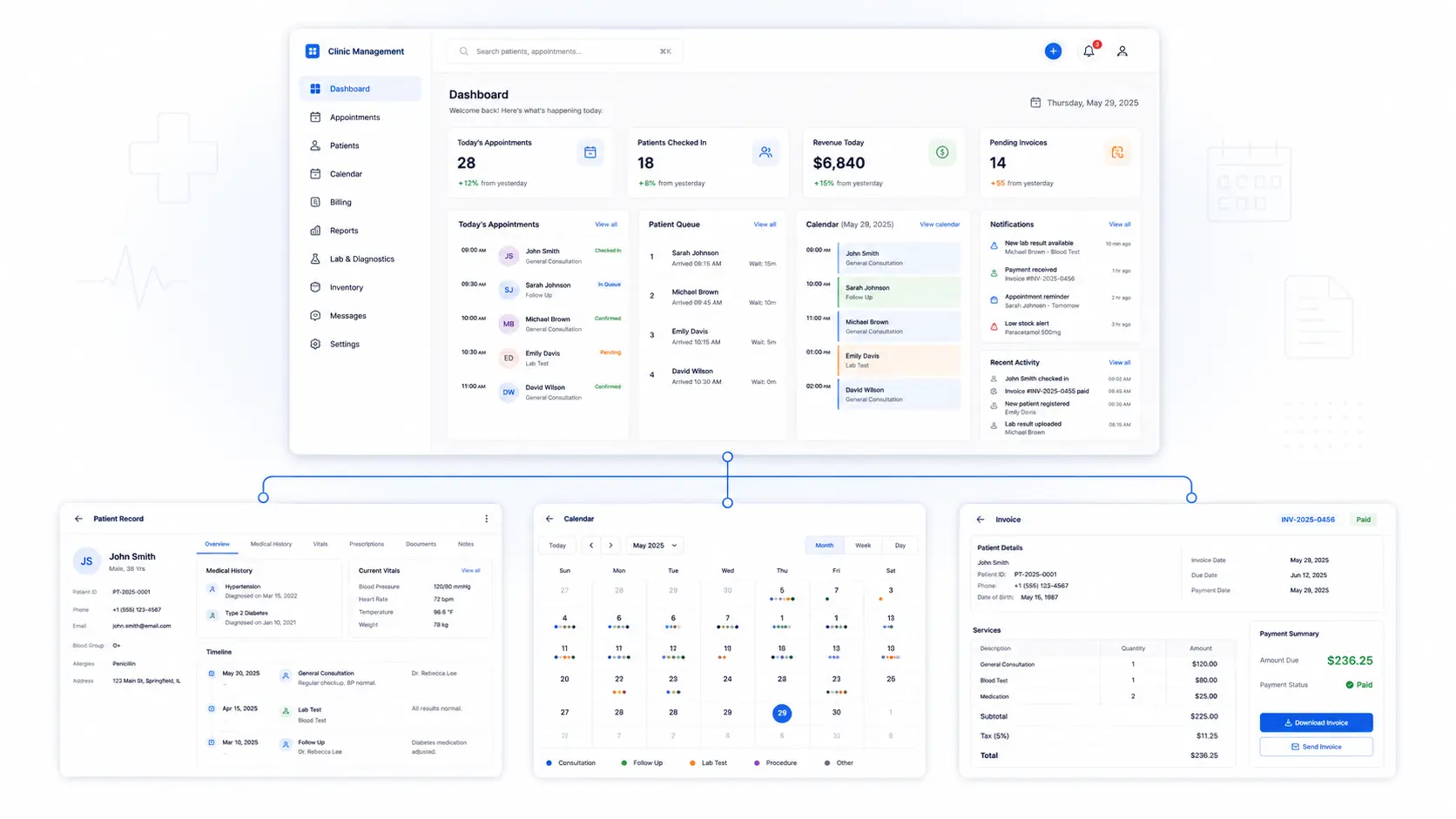
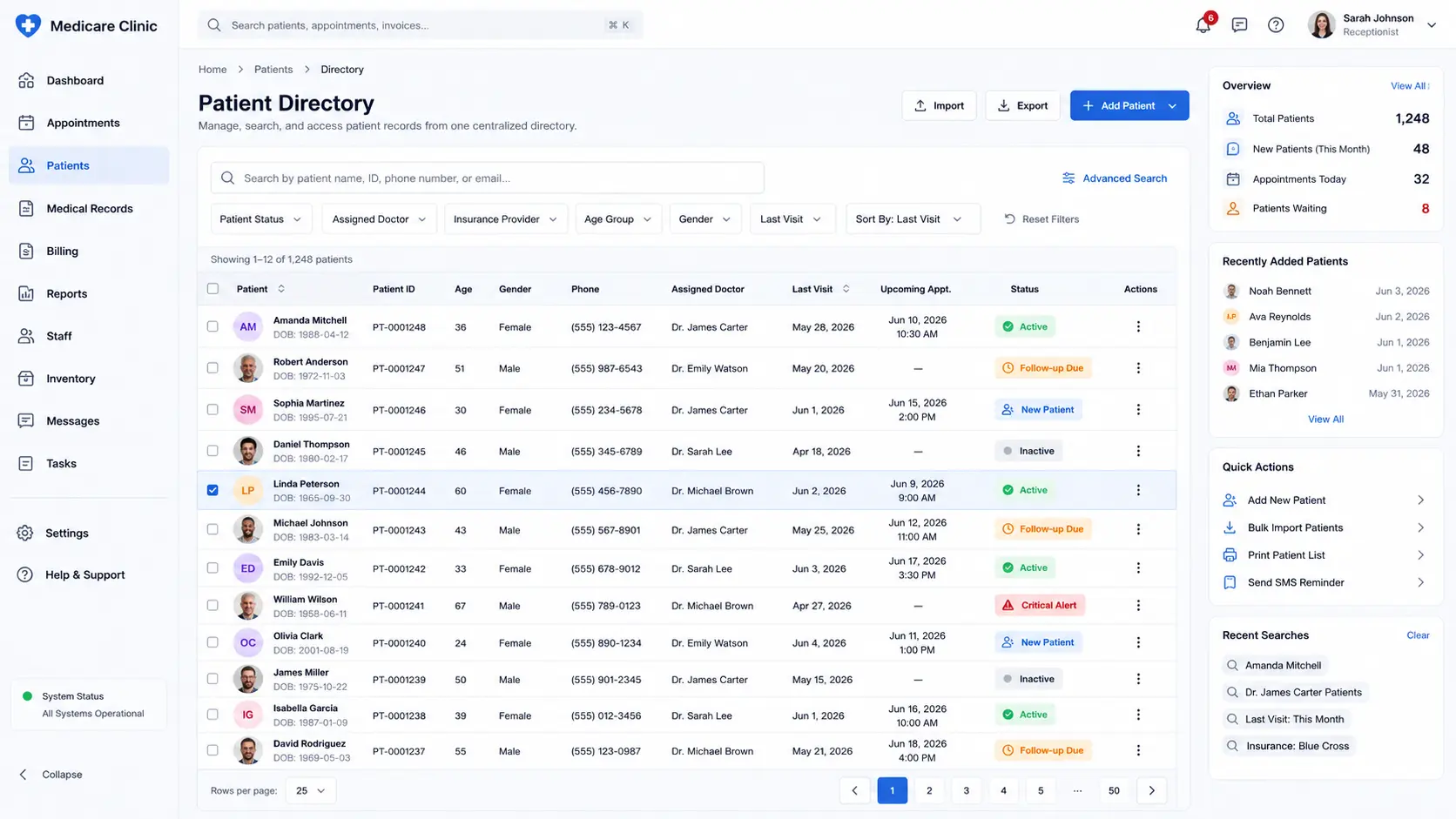
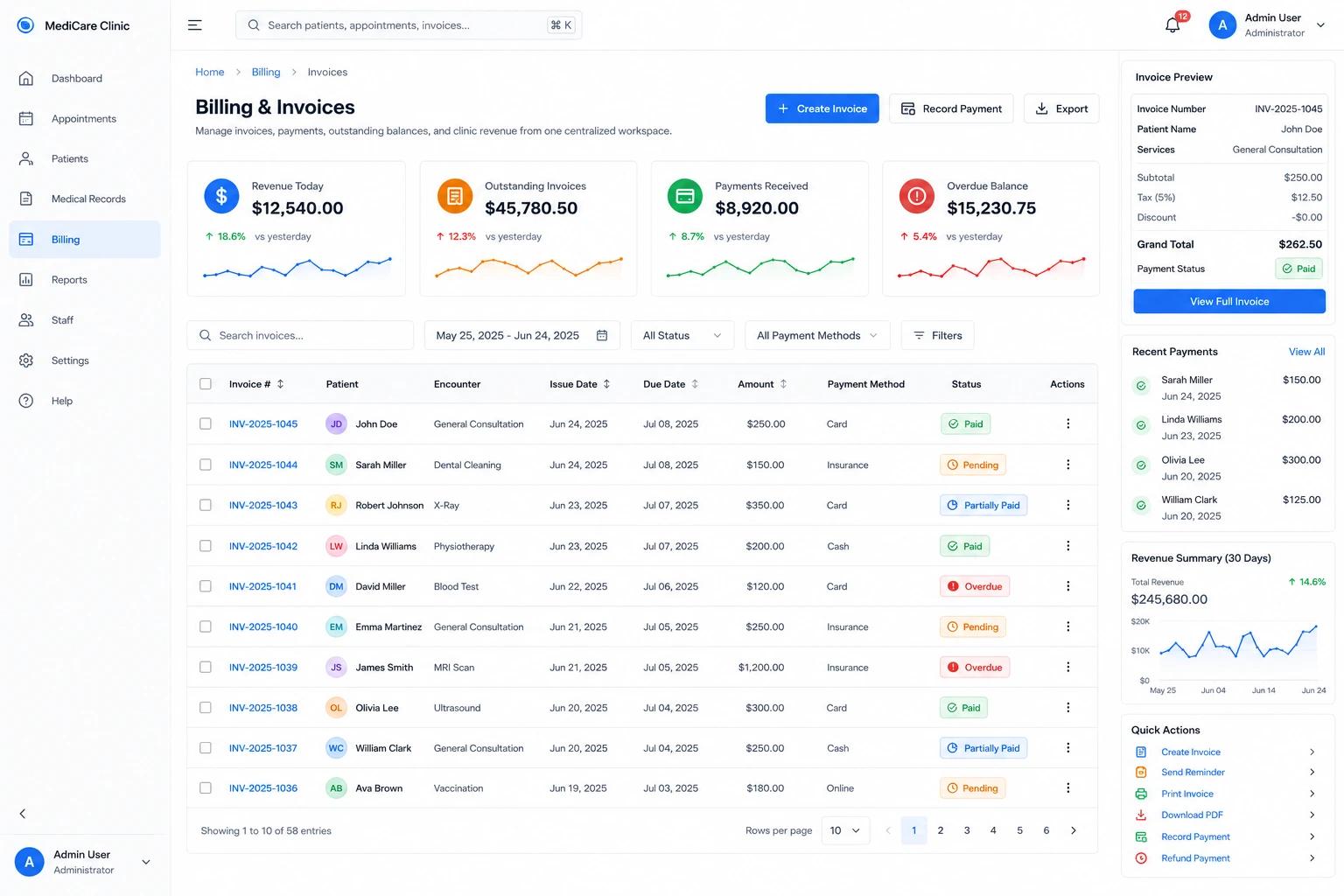
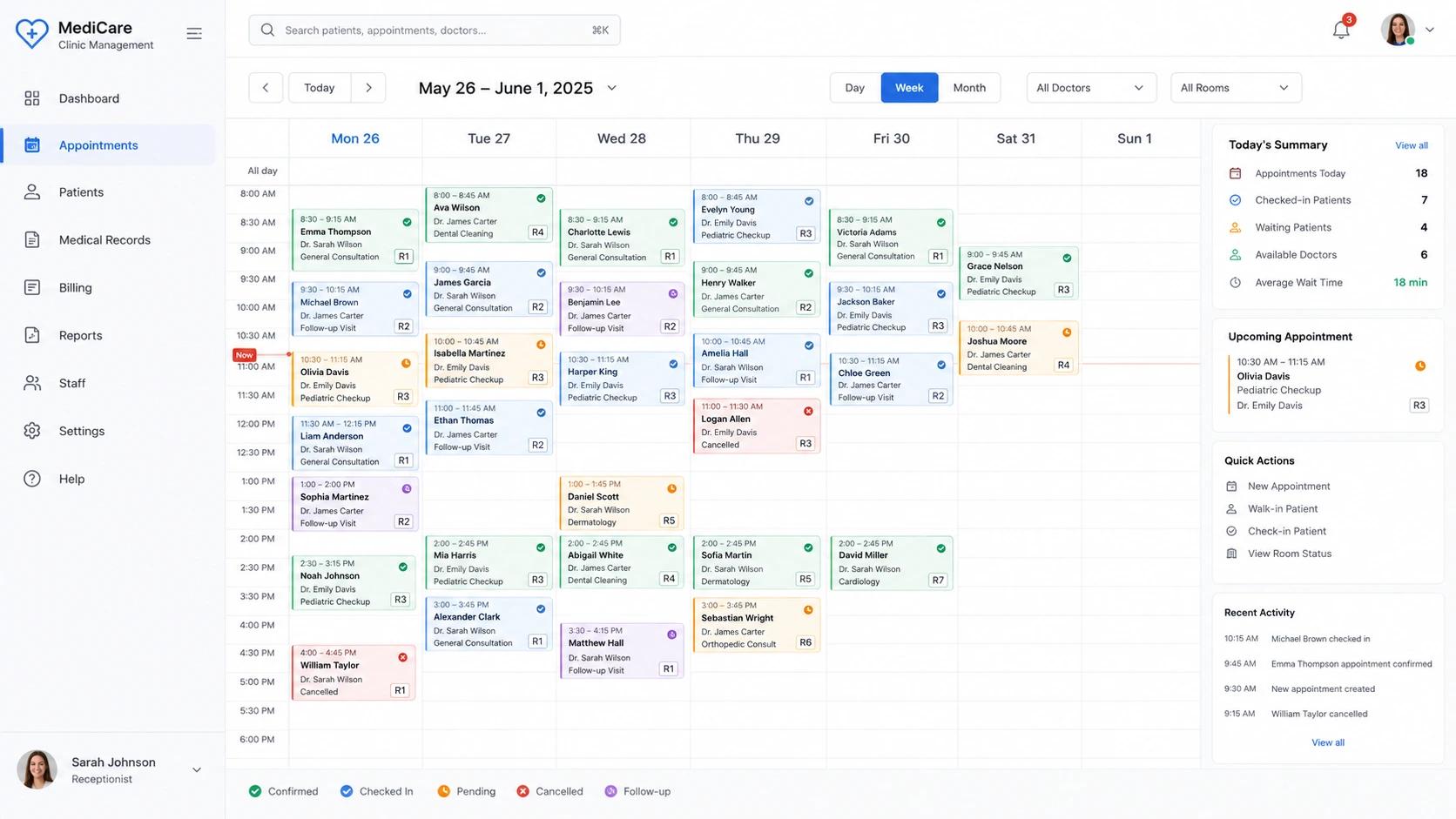
A web application that gives small and mid-sized outpatient clinics a single operational surface for appointments, patient records, and billing. Front-desk staff, clinicians, and administrators work from one shared data model instead of stitching together spreadsheets, paper charts, and disconnected invoicing tools.
Independent clinics typically run scheduling, clinical notes, and invoicing in separate systems that never reconcile. The result is predictable: double-booked slots, patient details re-keyed three times, encounters that are billed late or not at all, and a front desk that spends its day on the phone chasing information. None of these tools share a source of truth, so every hand-off is a chance to lose data.
The design began from a workflow analysis of a typical outpatient front desk, where the highest-friction moments are check-in, locating a returning patient's history, and closing out an encounter for billing. Mapping these tasks showed that most delays came from context-switching between tools rather than from any single slow step, which is why the data model was kept unified rather than optimizing each screen in isolation.
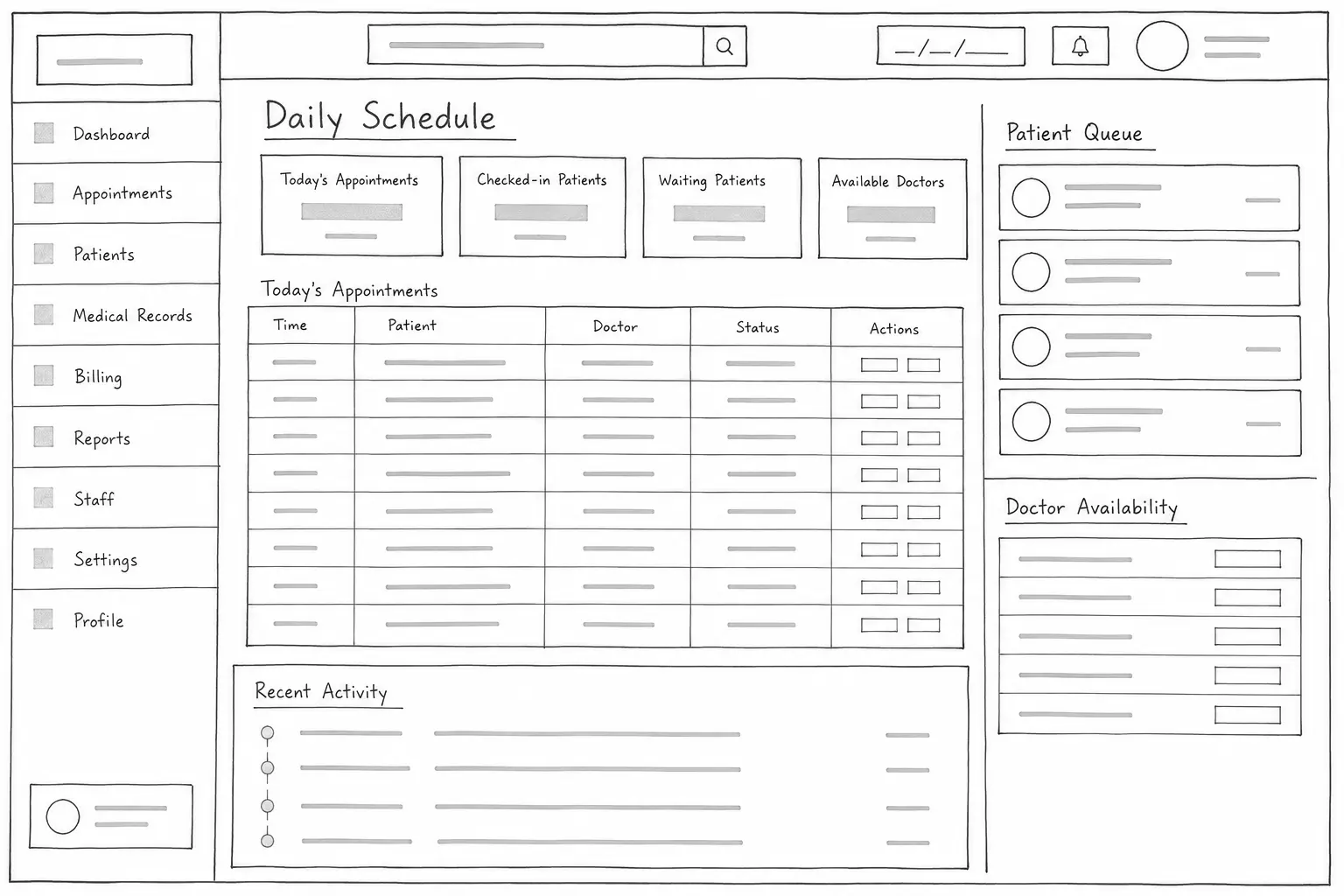
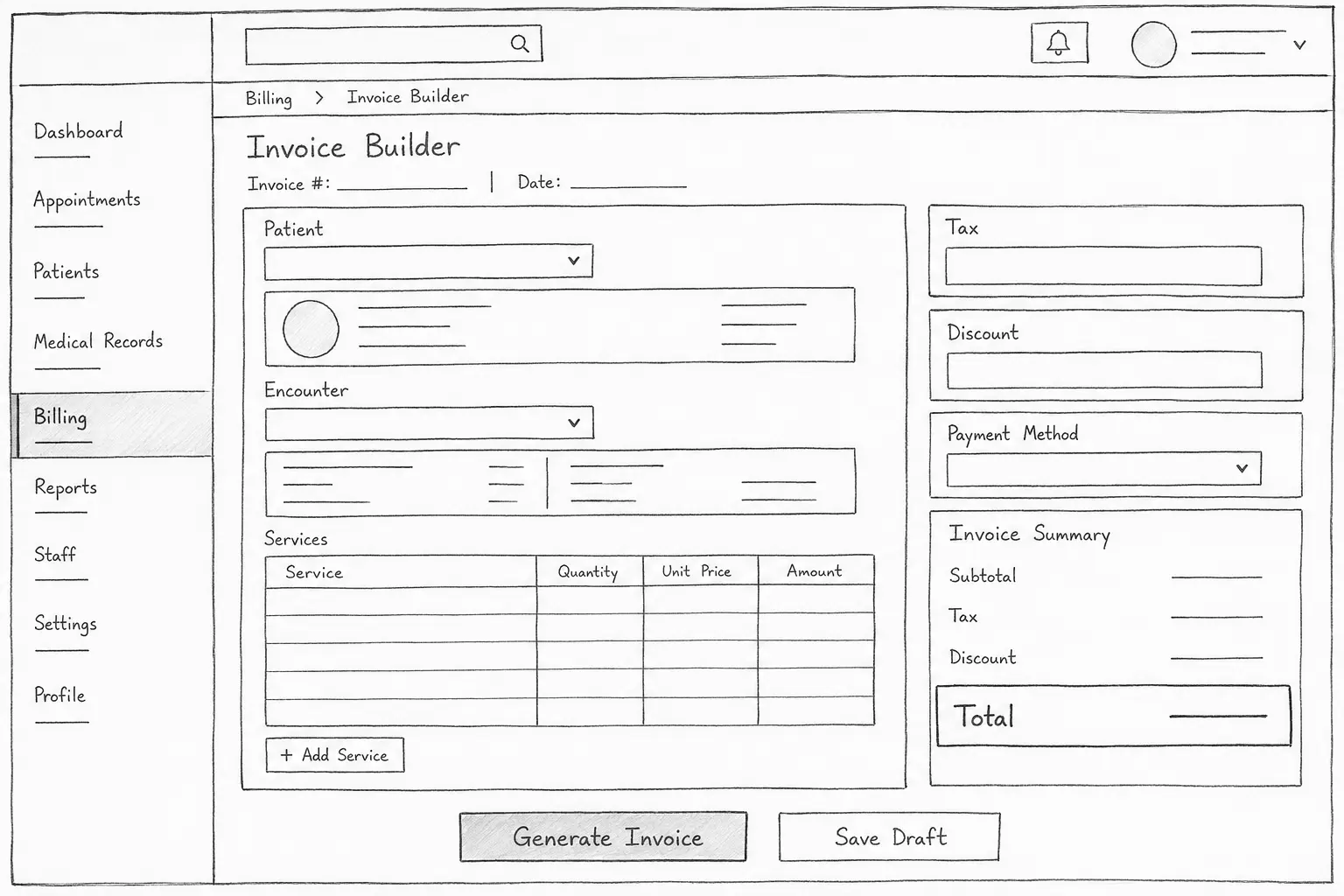
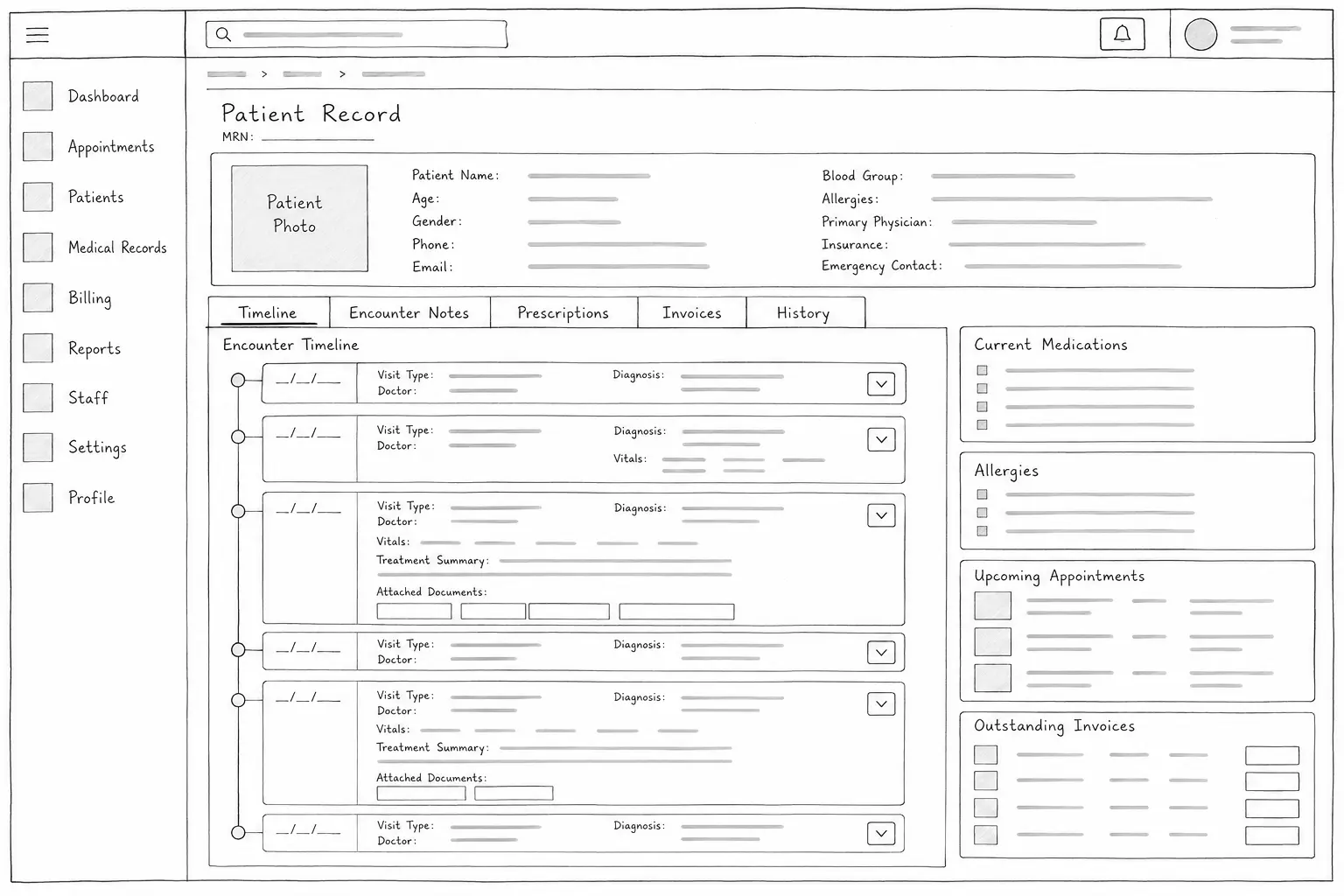
The relational model centers on Patient, Appointment, Encounter, Invoice, and User (staff) entities. A Patient has many Appointments; each Appointment belongs to a Provider (User) and, once seen, is linked one-to-one with an Encounter that stores the clinical note. An Encounter produces one Invoice, which has many InvoiceLine items. Roles and permissions are normalized into Role and Permission tables referenced by User, so access rules are data-driven rather than hard-coded.
A REST API organized around resource collections: /api/patients, /api/appointments, /api/encounters, and /api/invoices, each supporting standard CRUD with filtering and pagination. Nested reads such as /api/patients/:id/appointments expose relationships without over-fetching. Authentication uses JWT access tokens with short lifetimes and refresh tokens; every route passes through role-checking middleware that authorizes the action against the caller's permissions before the handler runs.
A Next.js App Router frontend using server components for data-heavy views (patient lists, schedules) and client components for interactive surfaces like the calendar and forms. Shared primitives (buttons, cards, tables, dialogs) come from a common design-system layer, and feature areas (scheduling, records, billing) are organized as self-contained route segments. Data fetching is colocated with the server components that need it, keeping client bundles small.
A Node.js and Express.js service layered into routes, controllers, and services, with data access isolated behind a repository layer over PostgreSQL (via Prisma). Business rules (conflict detection, invoice generation) live in the service layer so they are reusable and independently testable. Request validation and error handling are applied as middleware, giving every endpoint consistent input checking and error shapes.
Links will be added when the project is published.
Get in touch
We'd be glad to discuss how a solution like this could fit your organization.